

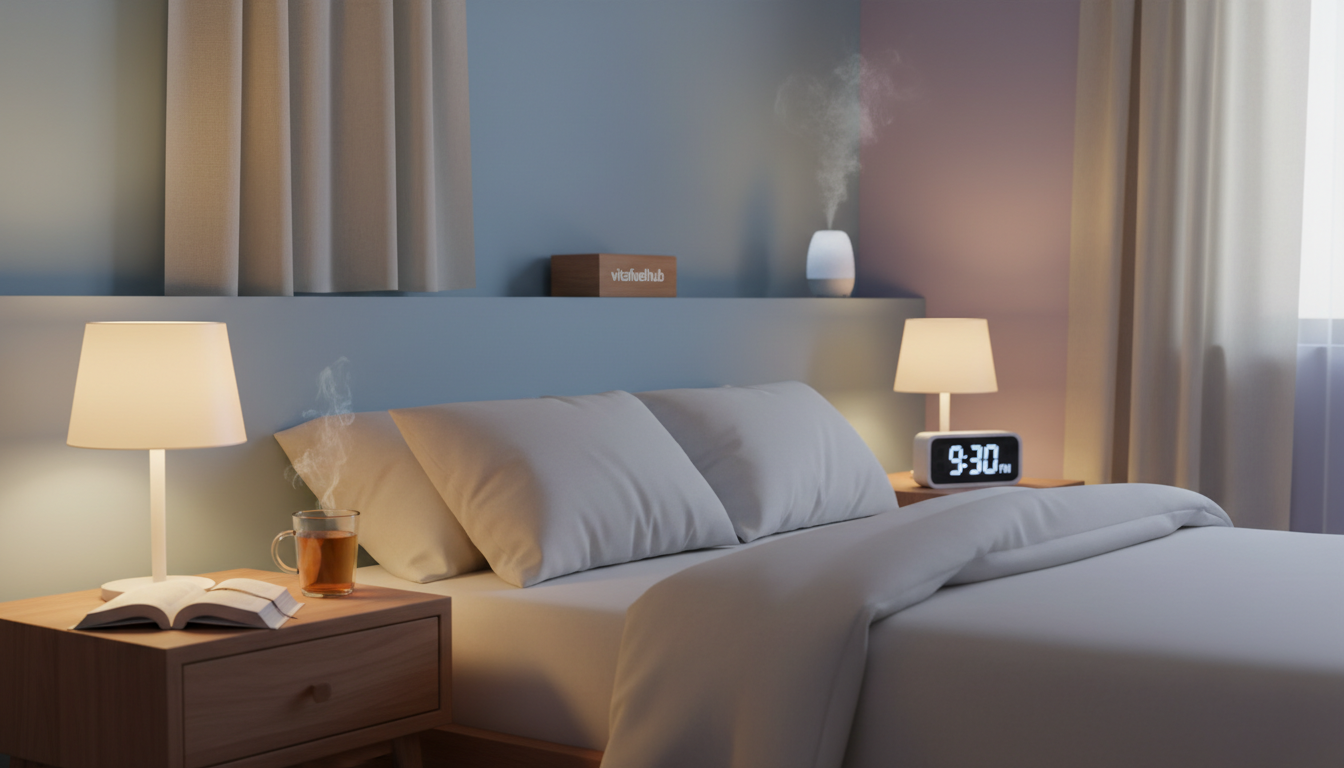

Nearly one-third of adults report not getting enough rest each week, a gap that shrinks performance and mood fast.
A calm hour before bed helps the body and mind shift away from the day’s demands. A consistent set of actions in the 30–60 minutes before bed signals the brain to unwind.
Create a quiet, cool bedroom and dim bright light to fall asleep faster and keep deep phases longer. Dr. David Rosen, a sleep medicine physician, stresses that internalizing simple habits is the key to a good night and steady recovery.
Prioritizing sleep hygiene gives your body the base it needs to do its best during the next day. Small steps tonight yield large gains in energy, focus, and healing.
Key Takeaways
- Spend 30–60 minutes of calm activities before bed to cue rest.
- Keep a regular schedule so the body learns when to recover.
- Design a bedroom that supports deep, uninterrupted sleep.
- Simple, repeatable habits build consistent, restorative nights.
- Prioritizing hygiene helps the mind and body perform the next day.
Understanding the Science of Sleep
Biological cues like temperature and hormones guide when you enter deep restorative phases. According to the CDC, more than one-third of U.S. adults report poor sleep, which harms daily function and long-term health.
Research by Cagnacci et al. (1997) shows melatonin release and a drop in core body temperature are central to the natural circadian cycle. These shifts help the brain move into slower waves and promote physical repair.
Good sleep hygiene supports those processes. Simple habits cue the mind and body that it is time to rest. Over time, this raises overall sleep quality and leaves you more alert during the day.
Practical steps target three targets: hormone timing, stable temperature, and calming activities. When people learn to manage their internal clock, they can get better nights and more consistent quality sleep.
- CDC: widespread poor sleep affects health and day-to-day performance.
- Melatonin plus lower core temperature enable deep restorative phases.
- Adopting sleep hygiene helps mind and body complete nightly repair.
Why You Need a Night Routine for Better Sleep
A steady pre-bed sequence helps your internal clock know when to shift into repair mode. This alignment with the circadian rhythm sets hormonal timing that helps you fall into deep phases more reliably.
The Role of Circadian Rhythms
Supporting your circadian rhythm means keeping consistent sleep and wake times across most days. The National Sleep Foundation notes that occasional catch-up hours on weekends can help after a week of insufficient rest.
Benefits for Physical Recovery
A predictable set of bedtime actions improves sleep quality and helps the body complete nightly maintenance. That boosts immune response and mental focus the next day.
Regular daytime exercise and calming activities also contribute to good sleep hygiene. When people address both daytime habits and pre-bed cues, they tend to get better sleep and wake more energized.
- Consistent pre-bed steps support circadian rhythm and recovery.
- Healthy daytime exercise and mindfulness improve sleep quality.
- Prioritizing night sleep helps the body repair and restores energy for the day.
Establishing a Consistent Bedtime Schedule
Choose a consistent bedtime and wake time that fit your daily life. Dr. David Rosen, a Sleep Medicine Physician, says the hard part is breaking bad habits and having a plan when you falter.
Pick a target time to get into bed and a fixed wake time. Sticking to that plan, even on weekends, trains your brain and body to feel tired at the same hour.
Start your bedtime routine 30 minutes to 2 hours before you intend to fall asleep. That window gives your body time to unwind and cue hormones that support deep rest.
If evening exercise keeps you alert, move workouts earlier in the day. Maintaining consistent sleep hygiene is vital for long-term health and for stabilizing your circadian rhythm.
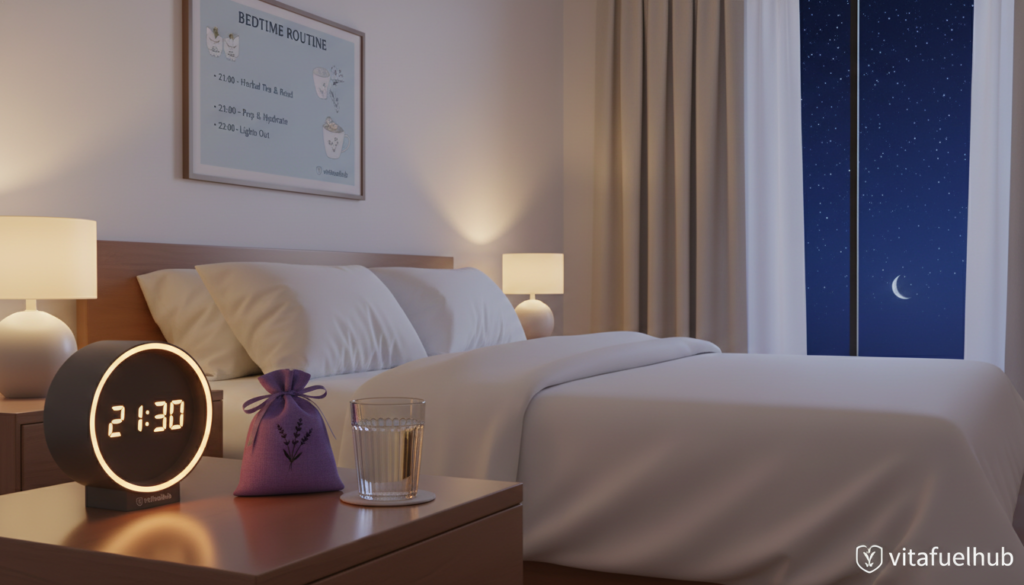
- Decide on times that match your life and obligations.
- Begin pre-bed activities 0.5–2 hours before bed.
- Keep wake times steady, even on weekends.
| Action | Timing | Benefit |
|---|---|---|
| Set bedtime and wake time | Daily | Regulates circadian rhythm |
| Begin wind-down | 30–120 minutes before bed | Helps you fall asleep faster |
| Adjust exercise | Earlier in the day if needed | Prevents late alertness |
Use a simple tracker or a plain journal to log times. Small changes add up—see our daily wellness plan for ideas to anchor your schedule.
Optimizing Your Bedroom Environment
Small tweaks to your sleeping space can make it easier to fall asleep and stay asleep. A clear, calm bedroom cues your body that it is time to rest and supports overall health.
Temperature Control
Set the thermostat between 65 and 68 degrees Fahrenheit. This range helps your body cool down, which supports deeper phases of sleep.
Keep breathable bedding and a fan or quiet HVAC system to hold a steady temperature over time.
Managing Noise Levels
Reduce disruptive sounds with heavy curtains, rugs, or a white noise machine. These options smooth sudden changes and help you stay undisturbed.
Place noisy electronics away from the bed and use soft padding where footsteps or street noise enter.
Creating a Dark Sanctuary
Block incoming light with blackout curtains or shades. Low light signals let your body release melatonin and prepare to rest.
Reserve the bed for sleep and intimacy only. Keep devices, work items, and bright screens in another room to protect sleep hygiene.
| Element | Action | Benefit |
|---|---|---|
| Temperature | 65–68°F with breathable bedding | Supports body cooling and deeper rest |
| Noise | Heavy curtains, rugs, white noise | Reduces awakenings and improves quality |
| Light | Blackout curtains; limit screens | Promotes melatonin release and dark sanctuary |
| Bed use | Use only for sleep and intimacy | Strengthens mental sleep cues |
Managing Light Exposure and Electronic Devices
Bright screens and overhead lamps can delay your brain’s shift into restorative states. Electronic devices emit blue light that lowers melatonin and tricks the body into thinking it is daytime.
Put devices away at the start of your bedtime routine and leave them outside the bedroom when possible. That reduces late stimulation and helps you fall asleep more reliably.
Turn on a red-light filter well before the last hour if you must use a phone. Red tones are less disruptive to melatonin release and protect your body’s natural winding-down process.
Avoid activating or bright activities in the final hour. Dim lights, read a paper book, or practice quiet breathing to support sleep hygiene and calm the mind.
- Start device curfew at the beginning of pre-bed activities.
- Move screens out of the bedroom to prevent overnight alerts.
- Use warm lighting in the last hours to help the body prepare.
| Action | When | Why it helps |
|---|---|---|
| Put devices away | At start of bedtime routine | Reduces blue light and mental stimulation |
| Enable red-light filter | 1–2 hours before bed | Limits melatonin suppression if screens are used |
| Dim room lights | Final hour before bed | Signals the body to begin winding down |
| Keep bedroom device-free | All night | Prevents disturbances and overstimulation |
Dietary Habits for Restful Nights
Small evening food choices can ease digestion and nudge your body toward restorative rest.
Choose light, nutrient-rich snacks in the hour before bed to calm the stomach without causing discomfort. Cherries, grapes, kiwi, rice, and nuts have each been linked to improved rest when eaten as a gentle evening bite.
Avoid heavy meals or alcohol too close to your bedtime. They can cause indigestion or late bathroom trips that interrupt night sleep.

Choosing the Right Evening Snacks
If hunger wakes you late in the day, opt for yogurt or fruit to help fall asleep by reducing stomach upset. Also, skip caffeine after lunch to prevent stimulants from keeping the body alert.
| Snack | When to eat | Benefit |
|---|---|---|
| Cherries or kiwi | 30–60 minutes before bed | Support natural melatonin and calm digestion |
| Small bowl of rice | 1–2 hours before bed | Easy to digest; helps settle the stomach |
| Nuts or yogurt | 30–60 minutes before bed | Protein and healthy fats that prevent hunger |
Plan meals at least three hours before your bedtime so the body has time to digest. Healthy dietary habits are a key piece of sleep hygiene and overall health.
Relaxation Techniques to Calm the Mind
Small, calming actions in the last hour before bed ease physical tension and mental chatter.
Deep breathing and progressive muscle relaxation may help by lowering heart rate and releasing tightness in the body. Try a 5–10 minute cycle of slow breaths, then tense and relax major muscle groups one at a time.
Take a warm bath at least an hour before you get into bed. The temperature drop afterward can help you fall asleep faster and signals your body that it is time to rest.
Listening to calming music, pink noise, or ambient sounds may help mask jarring sounds and turn attention away from worry. Choose steady, low-volume tracks and avoid energetic or suspenseful genres.
Avoid bright lights and active devices in the final hour. Read a simple book in soft light instead; quiet reading often helps the mind unwind and can help fall asleep faster.
- Quick practice: 5 minutes deep breathing + 10 minutes muscle relaxation.
- Timing: Bath at least 60 minutes before bed to aid temperature change.
- Sound: Calm music or pink noise to improve sleep quality.
Incorporating Physical Movement and Stretching
A short, calming yoga flow can lower tension in the muscles and quiet the mind.
Try gentle yoga in the last 20–30 minutes before bed to relax the body and reduce aches. A 2013 study by Bankar et al. found long-term yoga practice significantly improves sleep quality in older adults.
Keep poses slow and steady. Focus on hip openers, gentle twists, and forward bends to ease tightness.
Gentle Yoga for Muscle Relaxation
Combine breathing with progressive muscle relaxation to calm both muscle groups and the nervous system. This helps you fall asleep more quickly and supports overnight repair.
Simple stretches or a short self-massage can prevent cramping and relieve tension. These moves also help regulate body temperature and comfort once you get into bed.
- Daily light yoga supports long-term sleep quality and muscle relaxation.
- Progressive muscle work eases tension and improves recovery.
- Stretching helps you transition away from day activity and into rest.
| Activity | Duration | Benefit |
|---|---|---|
| Gentle yoga flow | 15–30 minutes | Improves sleep quality; relaxes muscles |
| Progressive muscle relaxation | 5–10 minutes | Calms nervous system; aids falling asleep |
| Light stretching or self-massage | 5–10 minutes | Prevents cramps; eases into bed comfort |
Tracking Your Progress with a Sleep Diary
A two-week sleep diary gives people a clear view of how daytime actions shape bedtime outcomes.
Keep entries short and consistent. Note when you go to bed, when you get out of bed, and how long it takes to fall asleep. Add a line about mood and energy the next day.
Include the time you stop using electronic devices and when you eat dinner. A 2018 study by Scullin et al. found that writing a quick to-do list before bed helped people fall asleep faster.
Track when you use muscle relaxation techniques and any calming practices. Over two weeks, patterns will emerge that point to which habits most affect sleep quality.
- Log device cutoff and evening meals to spot links with sleep quality.
- Record brief notes on muscle relaxation and wind-down actions.
- Review entries weekly and adjust habits to improve sleep hygiene.
Conclusion
Small, repeatable actions before bed set the stage for restorative rest.
Consistently following a calm bedtime helps your body and mind get a good night sleep and supports long-term health. Focus on a quiet, dark environment and basic sleep hygiene to improve sleep and reach quality sleep more often.
Expect occasional slips on weekends. Stay committed and you will get better results over weeks. A good night of rest lets the body recover and makes it easier to wake refreshed.
Takeaway: simple habits, steady timing, and a soothing space will help get better sleep and support your overall health.