

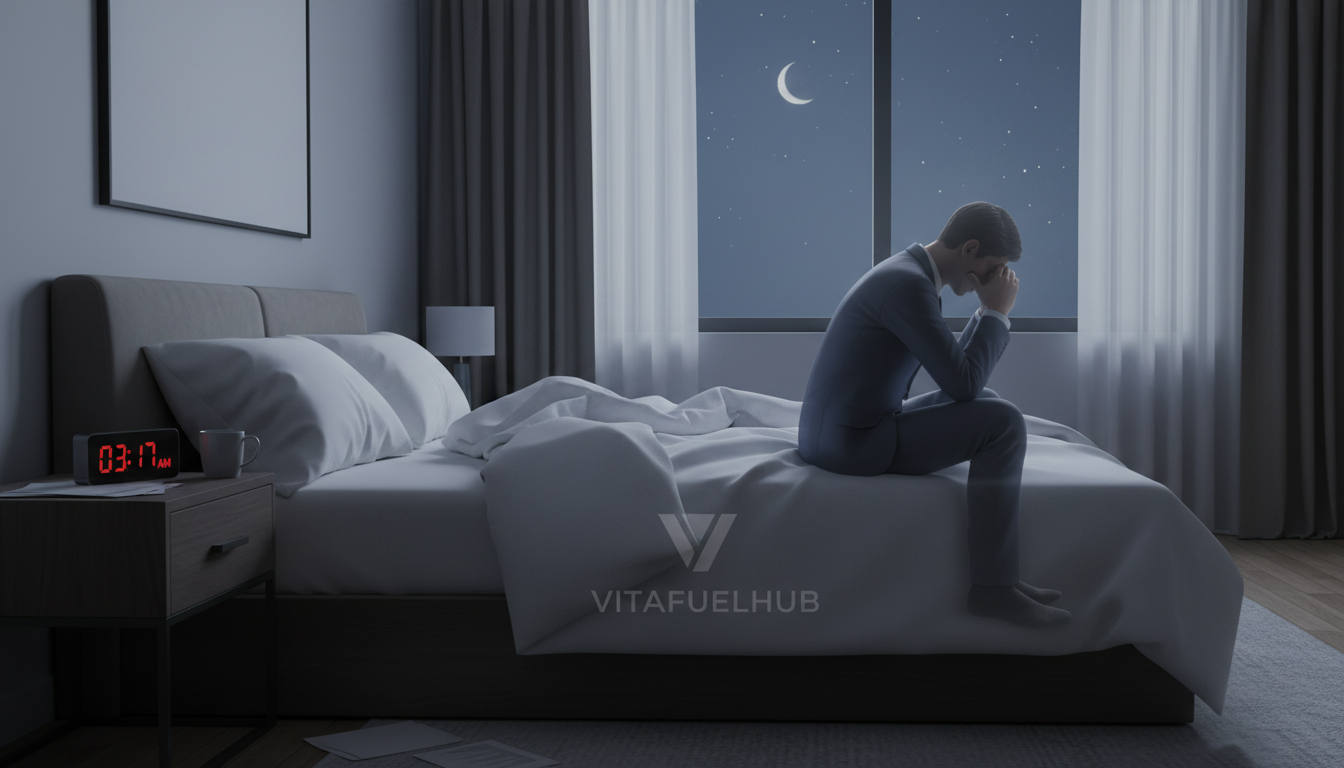

Nearly one third of adults report nights where rest slips away, and the reason often starts long before lights-out.
Catherine C. Schuman, Ph.D., a clinical psychiatrist at Dartmouth Health, explains that the body’s fight-or-flight response kicks in when we worry about work, money, or other pressures.
That reaction raises heart rate, tightens muscles, and floods the system with hormones that keep the mind alert even when the body is tired.
Most adults need seven to nine hours daily for a healthy brain and body, yet a few bad nights can turn into many if these cycles repeat.
Start small: take a few minutes tonight to notice your thoughts, try steady breathing, and practice simple relaxation before getting into bed.
Key Takeaways
- The body’s fight-or-flight response can block rest by raising heart rate and tensing muscles.
- Dartmouth Health notes adults generally need seven to nine hours for good brain and body function.
- Hormones and racing thoughts may keep you awake even when you feel exhausted.
- Short, calm routines—breathing and relaxation for a few minutes—help reclaim nights.
- Acknowledge what worries you early in the evening to protect rest and daily health.
Understanding the Connection Between Stress and Sleep
Researchers describe a two-way link where daily pressures change how you rest at night. Dr. Kelly Baron, a sleep expert at University of Utah Health, explains that this bidirectional relationship can harm overall health.
Alexandria M. Jarvis from Dartmouth Health notes the brain often cannot tell different kinds of pressure apart. That keeps the body in a low-grade alert state, making deep recovery rare.
Changes in work or daily routines can leave people feeling frazzled and prone to anxiety. You may notice small things irritate you more during the day when your system is already taxed.
Understanding this link is the first step toward managing common sleep disorders and finding a better way to handle life’s demands. A qualified expert can guide diagnosis and useful strategies.
| Issue | How It Affects Rest | What an Expert Recommends |
|---|---|---|
| Persistent alertness | Reduces deep stages of rest | Relaxation training and routine changes |
| Routine disruption | Irregular bed and wake time | Consistent schedules and light exposure control |
| Heightened irritation | Lower daytime resilience | Targeted therapy with a sleep expert |
For practical steps to improve nightly routines, see this guide to improve nightly routines.
How the Fight or Flight Response Disrupts Your Rest
When the body flips into fight-or-flight, hormones take over and reshape how your night unfolds. This response is useful in moments of danger, but it becomes harmful when it runs too long.
The Role of Cortisol and Adrenaline
The hypothalamic-pituitary-adrenal (HPA) axis releases cortisol and adrenaline to boost alertness and energy. These hormones raise heart rate and push blood pressure up.
Research shows persistent activation can keep cortisol high into the evening hours when it should fall. That disrupts the brain’s cue to wind down.

Impact on Sleep Architecture
Elevated arousal fragments the normal sleep cycle. Frequent awakenings reduce time in deep, restorative stages and cut REM hours.
Even after eight hours in bed, a hyper-alert head can leave you feeling unrefreshed. The body has mobilized energy stores that should be conserved for nightly recovery.
- Higher heart rate shortens deep stages.
- Flattened circadian rhythm keeps alerting hormones up late.
- Fragmented cycles lower overall rest quality.
Understanding how heart rate, cortisol, and adrenaline interact helps explain why daily pressure so often ruins rest. For signs that hormonal regulation may be off, see this guide on indicators your cortisol is dysregulated.
Breaking the Vicious Cycle of Sleeplessness
A few simple choices tonight can break the loop that keeps you awake for many nights.
If you cannot fall asleep within 20 minutes, get out of bed. That prevents the body from learning that bed equals wakefulness.
Do a low-key activity—fold laundry or read a calm book. These boring tasks shift focus away from racing thoughts and reduce nighttime anxiety.
“Worrying about not sleeping creates a cycle that increases anxiety and makes rest more elusive.”
Use deep breathing for a few minutes to tell the body it is in a safe place. Picture a peaceful scene to clear your head. Avoid stimulating activities in the middle of the night.
| Action | Why it Helps | Quick Tips |
|---|---|---|
| Leave bed after 20 minutes | Stops conditioning the body to stay alert | Keep lights dim; avoid screens |
| Boring activities | Shifts focus from anxious thoughts | Try folding clothes or gentle reading |
| Breathing & imagery | Signals safety to the body’s response | 5–10 deep breaths; visualize calm place |
Breaking this loop improves the body’s ability to cope during the day. Prioritize relaxation, not forcing rest, and the nights will follow.
Establishing a Healthy Daytime Routine
A steady daytime routine makes it easier for your body to unwind when evening arrives.

Prioritizing Physical Activity
Aim for at least 30 minutes of moderate exercise each day. Break movement into short bursts if you work from home.
Avoid intense workouts within an hour of bed to prevent late arousal.
Managing Light Exposure
Get about 20 minutes of sunlight in the morning. That cue helps set the circadian cycle and aids hormonal balance.
Nutrition and Meal Timing
Keep regular meal times and limit liquids one hour before bed. This reduces night awakenings and helps manage cortisol levels.
Place work areas away from snack zones to avoid impulsive eating, as Dr. Kelly Baron suggests.
| Habit | Why it Helps | Quick Tip |
|---|---|---|
| Morning sunlight | Aligns circadian rhythm | 20 minutes outside after waking |
| Daily exercise | Regulates hormones and mood | 30 minutes moderate; split sessions if needed |
| Consistent meals | Stabilizes energy and cortisol | Eat at similar times each day |
| Limit fluids late | Fewer night wakings | Stop heavy drinking 1 hour before bed |
Commit to these simple habits. Over time, they train your body’s response and make rest easier to reach.
Creating a Calming Bedtime Environment
Small changes in your bedroom set the stage for easier rest each night. Make the room cool, dark, and quiet so the body learns this is a place for rest.
Effective Relaxation Techniques
Turn off electronics one to two hours before bedtime. Blue light can suppress natural melatonin production and keep your brain alert.
Try the 4-7-8 breathing technique: inhale for 4 counts, hold 7, exhale 8. Repeat for a few minutes to lower heart rate and calm the stress response.
Progressive Muscle Relaxation helps you notice tension. Tense, then release each muscle group slowly. Finish by picturing a peaceful place, such as a quiet beach, as Alexandria M. Jarvis recommends.
Reserve the bed for rest and intimacy only. This strengthens the mental link between the space and falling asleep.
“Create a simple, consistent routine: dim lights, gentle breathing, and a calming activity before bed.”
| Technique | Why it Helps | Quick Tip |
|---|---|---|
| 4-7-8 breathing | Activates parasympathetic system; lowers arousal | Do 4–6 cycles, seated or lying down |
| Progressive Muscle Relaxation | Releases physical tension in the body | Work head-to-toe; 10–15 minutes |
| Calming activities | Lowers heart rate before bed | Warm bath or reading a paper book |
If issues persist, an expert can help craft a sleep-sanctuary and tailored routine. Small, consistent steps prepare your brain for a more restorative night.
When to Seek Professional Help for Sleep Disorders
If trouble falling asleep lasts more than a few weeks, schedule an evaluation with an expert.
Cognitive Behavioral Therapy for Insomnia (CBT-I) is the gold-standard treatment for chronic problems that stem from stress or anxiety. A trained clinician can teach tools to reframe negative thoughts, change habits around the bed, and reduce nighttime arousal.
See a provider sooner if poor rest interferes with work, harms relationships, or reduces daytime function. If you suspect apnea or other medical issues, testing may be needed to protect long-term health.
“Managing the body’s stress response and adrenaline with professional support can prevent short-term problems from becoming chronic.”
- When trouble lasts several weeks despite good habits — consult an expert.
- If anxiety or depression appears — seek combined care for mood and rest.
- Suspect apnea, loud pauses in breathing, or daytime sleepiness — get tested.
| Sign | Why to See an Expert | Typical Action |
|---|---|---|
| Persistent wakefulness | May indicate chronic insomnia | CBT-I referral, behavior plan |
| Daytime impairment | Work, mood, or safety affected | Medical evaluation, therapy |
| Loud snoring, gasps | Possible apnea, oxygen risk | Sleep study, treatment |
| High anxiety or low mood | Often co-occurs with poor rest | Psychotherapy, medication review |
Conclusion
Simple, repeatable rituals each evening give your nervous system the cue to relax and recover. Make sleep a clear priority, not a last-minute task.
Recognize how daily pressure like stress changes physiology over time. With small choices you can slow that cascade and restore balance.
A consistent wind-down helps the mind prepare for the coming night and shields long-term health. Treat routines as experiments; keep what works.
Over several weeks the body relearns a healthier cycle, so your nights feel more restorative and predictable.
Use proven habits to improve sleep: quiet the mind before bed, practice gentle relaxation, and try evidence-based techniques. If self-care falls short, seek professional help to reclaim rest.