


Surprising fact: adults who miss consistent restorative rest increase their risk of health problems, even if they log seven hours a night.
Understanding the difference between REM sleep vs deep sleep helps explain why hours alone don’t guarantee daytime energy. Each night your body moves through several stages that let the brain and body recover.
One stage blends vivid dreaming and rapid eye movement with irregular breathing and higher heart rate. Another stage brings slow brain waves, low muscle tone, and the deepest physical repair.
If you wake tired after enough hours, your patterns or a possible sleep disorder may be to blame. Good habits for falling asleep and steady routines can improve total sleep and the quality of each cycle.
Key Takeaways
- Hours matter, but stage balance determines true restoration.
- REM and deep phases support different brain and body functions.
- Frequent disruptions change cycles and reduce sleep quality.
- Watch for disorder signs if you feel unrefreshed after enough hours.
- Consistent routines and hygiene help reach the right amount of each stage.
Understanding the Sleep Cycle
Each night your nervous system cycles through stages that alternate light rest with deeper repair. This repeating rhythm is the basic sleep cycle that organizes recovery for brain and body.
The Stages of NREM
NREM divides into three clear stages: N1, N2, and N3. N1 is the lightest stage where gentle eye movement may occur and you drift off.
N2 brings slower brain waves, reduced heart rate, and a drop in body temperature. N3 is the deepest NREM phase and supports physical repair.
How Cycles Progress Throughout the Night
A typical cycle lasts about 90 to 110 minutes. Most people move through 4 to 5 cycles each night.
Early night cycles include more N3 time. Later cycles shift toward more REM and lighter stages. The amount of each stage changes with hours of rest, which helps explain daytime tiredness even after enough time in bed.
| Feature | Typical Duration | Primary Function |
|---|---|---|
| N1 (light) | 1–7 minutes | Transition, slow eye movement, drifting |
| N2 (deeper) | 10–25 minutes | Memory consolidation, slower brain waves |
| N3 (deepest) | 20–40 minutes | Physical restoration, hormone release |
The Role of Deep Sleep in Physical Restoration
The most restorative portion of the night focuses on repairing tissues, rebuilding muscle, and strengthening immunity.
Deep sleep (N3) is the most physically restorative stage sleep. About 25% of total sleep time should be in this phase to support health and recovery.
During this NREM sleep phase, brain activity shifts into slow delta waves. That makes waking difficult for a few minutes and lets the body focus on repair.
As heart rate and breathing drop, the body releases hormones that help build bone and muscle and boost the immune system. Most of this recovery happens in the first half of the night.
- The stage supports tissue repair and muscle rebuilding.
- It produces delta waves that slow brain activity.
- Missing early hours reduces restorative time and weakens recovery.
If you miss enough of this phase, your body may struggle to recover from daily physical demands. Aim for consistent routines that protect those vital hours of restoration.
Exploring REM Sleep and Cognitive Function
Roughly 90 minutes after falling asleep, the brain often shifts into a phase marked by vivid dreaming and high neural activity.

The Connection Between Dreaming and Memory
During REM sleep the brain becomes very active. Brain waves can mimic waking patterns as the mind consolidates learning and emotions.
Skeletal muscles go limp so the body stays still while the brain processes the day’s events. Breathing and heart rate can become irregular in this stage.
“Most vivid dreaming occurs during REM, and it helps tie new experiences into memory networks.”
- High brain activity supports emotional processing and creative problem solving.
- Rapid eye movement signals this stage while the body remains temporarily paralyzed.
- Later cycles grow longer, giving more time for cognitive restoration in the early morning hours.
| Feature | Typical Timing | Primary Cognitive Role |
|---|---|---|
| Onset | ~90 minutes after falling asleep | Start of vivid dreaming and memory replay |
| Physiology | Irregular breathing & heart rate | Emotional processing and neural reorganization |
| Cycle change | Longer in later hours | More time for learning consolidation |
Comparing REM Sleep vs Deep Sleep
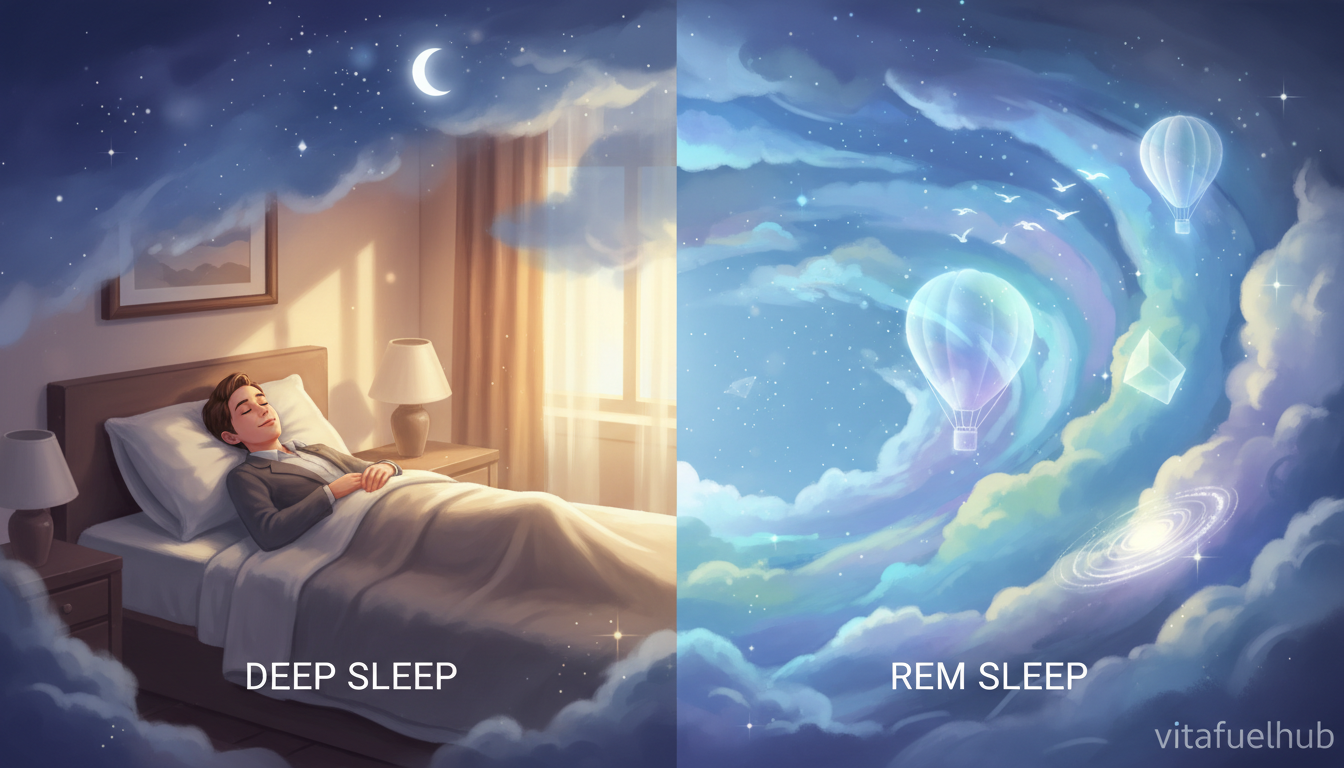
Two main categories of night stages split the work of recovery. One phase focuses on rebuilding muscle and immune function. The other supports memory, emotion, and neural reorganization.
Deep sleep delivers the slow brain waves that allow the body to repair tissue and release growth hormones. People tend to wake groggy if roused during this stage because the brain is in low-frequency activity.
Rem sleep features active brain patterns and rapid eye movement while muscles remain mostly relaxed. Waking from this phase can feel more alert because the mind is closer to a waking state.
Both stages are needed for full health. Deep sleep dominates early hours; rem increases toward morning. A balanced cycle gives your brain and body the time they each need.
- Deep phase = repair for body and muscles.
- Rem phase = memory consolidation and emotion processing.
- Healthy routines protect the amount and timing of both stages.
How Age and Gender Influence Sleep Patterns
Life phases rework the amount and timing of key night stages that support brain and body. These shifts shape total sleep needs and the mix of restorative and active stages across the lifespan.
Changes During Infancy and Childhood
Newborns need 14 to 17 hours per 24 hours to support rapid brain growth. Much of this time is split across multiple naps and longer night cycles.
As children age, total sleep falls and their architecture begins to resemble that of adults. By adolescence, the pattern of longer night cycles and clearer stages is usually in place.
Puberty and Adolescent Sleep
Hormonal shifts push bedtimes later and increase morning sleep needs for many teens. This biological change can make school-day schedules feel mismatched with the body’s natural timing.
Aging and Sleep Architecture
Older adults often spend less time in slow-wave phases and more time in lighter N2 stages. That means fewer hours of deep restoration and more fragmented nights.
Gender also matters: some studies show women may preserve restorative time longer than men as they age. Certain medications and health conditions can further alter patterns, reducing the amount of restorative stages a person gets.
For a deeper review of how cycles shift with age, see the science of sleep cycles.
Common Causes of Sleep Disruptions

Many common problems—from noisy neighbors to breathing pauses—disrupt the cycle that restores you overnight.
Obstructive sleep apnea is a frequent culprit. Repeated breathing pauses fragment the night and often prevent people from reaching deep sleep. That loss of restorative time harms physical repair and energy the next day.
Medications, including some antidepressants, can reduce how much rem sleep you get. That change affects memory and mood processing. If you notice cognitive or emotional shifts after starting a drug, discuss it with your clinician.
Environmental factors matter too. Noise, light, irregular hours, and room temperature all break stages and shorten total restorative time. Chronic interruptions create sleep deprivation, which reduces brain function and raises health risks.
- Obstructive breathing problems cut deep sleep and fragment cycles.
- Medications may lower rem sleep and alter brain processing.
- Noise and light prevent steady progression through stages.
- Long-term deprivation leads to daytime fatigue and health issues.
“If patterns are consistently interrupted, seek evaluation—an underlying disorder may need treatment.”
| Cause | Main Effect | When to Seek Help |
|---|---|---|
| Obstructive sleep apnea | Repeated arousals; less deep sleep | Loud snoring, gasps, daytime sleepiness |
| Medications | Reduced rem sleep; mood or memory changes | New symptoms after starting a drug |
| Environment | Fragmented stages; shorter cycles | Ongoing noise/light problems |
Strategies for Achieving Better Sleep Quality
Small, steady habits have the biggest impact on how well you rest each night.
Start by setting a consistent routine. Going to bed and waking at the same time helps your body prepare for falling asleep and stabilizes total sleep time.
Exercise 20–30 minutes during the day to boost tiredness at night, but avoid vigorous workouts right before bed. Light activity earlier improves sleep quality and daytime energy.
- Dark, quiet room: Reduce light and noise so your body can transition into deeper stages of nrem and restore itself.
- Avoid late caffeine and big meals: These disrupt cycles and make it harder to reach restorative hours.
- Wind-down routine: Try reading, breathing exercises, or gentle stretching to calm the mind before bed.
Prioritizing your sleep health improves both brain and body recovery and boosts daytime focus. For a full guide on building healthy habits, see this priority guide to high-quality rest.
| Action | Why it helps | Suggested timing |
|---|---|---|
| Consistent bedtime | Synchronizes body clock and total sleep | Same time nightly |
| Daytime exercise | Builds sleep pressure for the night | 20–30 minutes, earlier in the day |
| Dark, cool room | Limits light and distractions that fragment rest | Nighttime; remove screens |
When to Consult a Professional About Sleep Disorders
Persistent daytime fatigue after a full night of rest signals it’s time to get professional help.
If you follow good routines but still struggle with poor sleep quality, talk to your primary doctor. Consistent problems with energy, concentration, or mood are valid reasons to seek an evaluation.
A clinician may suggest a sleep study. A polysomnogram is the gold standard test to monitor brain activity, breathing, and movement through the night. It helps diagnose conditions such as sleep apnea or narcolepsy.
- Bring a list of current medications; some drugs disrupt stages and can cause symptoms.
- Be ready to report how many hours you sleep and how often you wake each night.
- Early care for a diagnosed disorder can reduce risks and improve daily quality of life.
“If your daytime function suffers, don’t delay—specialists can often find a treatable cause.”
Conclusion
Good nightly patterns protect learning, immunity, and daytime energy without extra hours in bed.
Balancing rem sleep and deep sleep matters because each stage supports different repair for the brain and body. Pay attention to your sleep cycle and simple routines to increase restorative time.
Small changes—consistent bedtime, a dark cool room, and daytime activity—help stages align so you wake more refreshed. If problems persist, consult a clinician to check for treatable issues and get a tailored plan.
Prioritize rest: every night is a chance to boost health, mood, and focus with the right habits and environment.