



Surprising fact: most adults move through four to six full cycles each night, with an average span of about 90 minutes per cycle — a rhythm that shapes how rested you feel the next day.
The human brain and body shift through distinct stages, from light rest to deep restoration and REM, each driven by patterns of brain activity and movement. Eric Suni notes that knowing these rhythms can change how you plan your time in bed.
Dr. Abhinav Singh of the Indiana Sleep Center stresses that quality matters as much as duration. Understanding NREM and REM stages helps answer questions about persistent tiredness and reveals when disorders like apnea disrupt breathing and restorative waves.
Key Takeaways
- Adults typically need four to six complete cycles per night for best health.
- Each cycle averages about 90 minutes and includes NREM and REM stages.
- Brain activity and body movement reveal whether you reach deep, restorative phases.
- Low quality or disorders like apnea can block recovery even with enough time in bed.
- Learning stage patterns can guide simple changes to improve daily energy.
Understanding the Science of Sleep Cycles Explained
What happens every night in four repeating stages shapes how you feel the next day.
The typical pattern moves through four distinct stages that repeat during the night. Each stage shows unique brain activity and body movement. Early stages are light; later stages are deeper and include REM.
The first cycle is often the shortest, usually between 70 and 100 minutes. After that, cycles lengthen, but the average stays near 90 minutes. As you pass through stages, body temperature drops and heart rate slows.
Knowing these patterns helps explain why waking at the wrong moment feels jarring. The National Center for Biotechnology Information notes a progression through NREM stages followed by REM.
- Four repeating stages per night guide restoration.
- Brain waves and movement mark each stage.
- Tracking nightly activity can reveal health issues.
| Feature | Typical Range | What to Watch |
|---|---|---|
| First cycle length | 70–100 minutes | Shorter first cycle is normal |
| Average cycle | ~90 minutes | Consistency indicates healthy rest |
| Physiological signs | Temp drop, slower heart | Shows transition through stages |
For a deeper read, explore the science of sleep cycles to learn how tracking can improve daily energy and long-term health.
The Architecture of a Restorative Night
The structure of your nightly rest reveals whether hours in bed become real recovery.
Defining sleep architecture
Sleep architecture maps the order and length of stages across the night. Clinicians often plot this in a hypnogram to show transitions between NREM and REM. That visual makes it clear when the brain and body reach deeper repair.
The importance of sleep quality
High sleep quality is more than total time asleep. It means you move through the right stages and spend enough time in deep, restorative phases.
- Architecture reveals stage timing and movement through the night.
- Hypnograms help clinicians spot fragmented or shallow rest.
- Poor architecture can harm daily focus, memory, and long‑term health.
| Feature | What it shows | Why it matters |
|---|---|---|
| Hypnogram | Visual timeline of stages | Highlights missing deep or REM periods |
| Stage duration | Minutes per stage each night | Indicates restorative balance |
| Movement & activity | Awakenings and shifts | Shows fragmentation that reduces quality |
Decoding the Stages of Non-REM Sleep
NREM sleep guides the early part of the night, moving the mind and body from light rest into deeper repair. Each stage has a clear role in recovery and lasts only minutes to tens of minutes.
Light Sleep and Transitioning
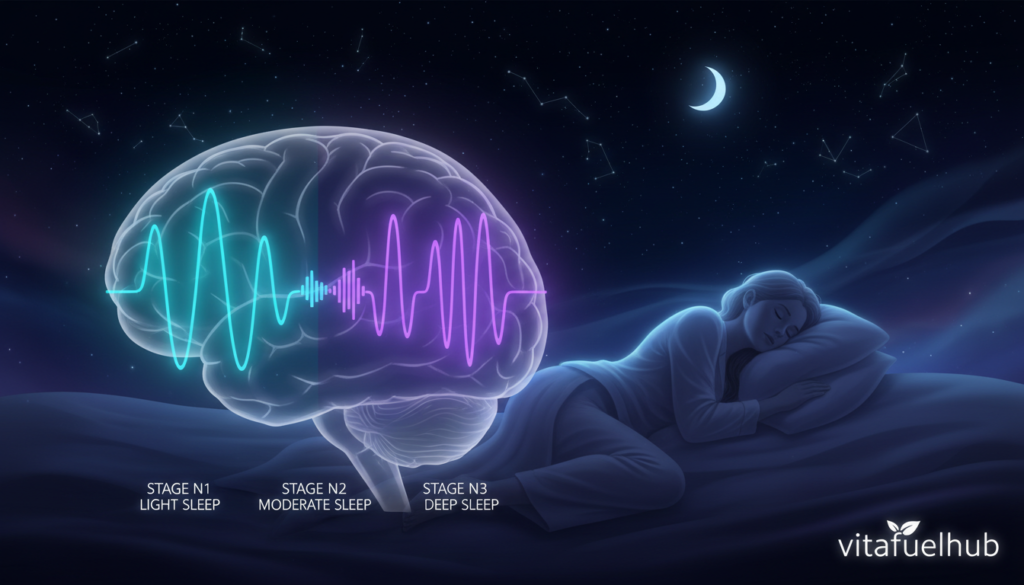
Stage 1 (N1) is the first state you enter after falling asleep. It typically lasts 1 to 7 minutes while brain activity slows and you drift from wake to rest.
The Function of Stage Two
Stage 2 (N2) lasts about 10 to 25 minutes in early cycles and comes to occupy much of total sleep time. Body temperature drops and heart rate slows, which helps block awakenings from outside noise.
Deep Sleep and Physical Restoration
Stage 3 (N3), or deep sleep, lasts roughly 20 to 40 minutes. This is when slow delta waves dominate and the body repairs tissue, boosts the immune system, and restores physical energy.
- NREM stages support both brain and body recovery each night.
- People with sleep apnea may fail to reach enough deep sleep, harming daytime alertness and health.
- After NREM, REM sleep follows and may also be interrupted if you wake often.
To learn practical tips to prioritize deep restorative time, see how to prioritize high-quality rest.
The Role of Rapid Eye Movement
REM marks a shift to vivid dreaming and a surge of brain activity that looks almost like wakefulness.
REM sleep usually starts about 90 minutes after you fall asleep. During this stage, the brain increases activity and produces the vivid dreams many people recall. Your eyes move rapidly behind closed lids and breathing becomes more irregular than during NREM sleep.
The body also enters atonia — a brief, protective paralysis that stops large muscle movement. This prevents you from acting out dreams and keeps nighttime movement safe.
Research links REM to emotional health, learning, and memory. As the night advances, REM periods lengthen; later stages may last up to an hour in healthy adults. Heart rate and blood pressure can vary during this time, mirroring intense brain activity.
“Understanding rapid eye movement helps explain why this phase is so critical for cognitive function and overall mental health.”
- Brain activity rises to near‑wake levels, so dreams are vivid.
- Atonia protects the body from acting out dreams.
- Longer REM later in the night supports emotional processing and learning.
How Sleep Cycles Evolve Throughout the Night
Nighttime rest unfolds as a series of repeating 90-minute blocks, each favoring different restorative tasks.
The Ninety Minute Progression
Throughout a typical night, the body moves through four to five 90-minute blocks that mix NREM and REM stages.
Early blocks contain more deep sleep. This is when the body repairs tissue and boosts immune function.
Later blocks shift toward REM. Brain activity and eye movement rise, supporting memory and emotional processing.
- The portion of light sleep grows while deep sleep shortens as night progresses.
- By the final block, the body may favor REM and skip deep stages entirely.
- Completing full 90-minute intervals improves overall health and daytime alertness.
“Understanding how each block changes helps explain why uninterrupted time matters for both body and brain.”
Biological and Environmental Factors Affecting Sleep
Internal clocks and outside factors often decide whether your rest is deep or fragmented.
The suprachiasmatic nucleus (SCN) in the hypothalamus drives your circadian rhythm and helps time when the brain and body enter each stage. Light and meal times tell the SCN when it is day or night.
Environmental cues matter. Bright screens, late meals, or noise can make it hard for the brain to shift from NREM to REM. Alcohol changes sleep architecture, often cutting REM early and causing a rebound later.

Disorders such as sleep apnea cause repeated awakenings and disrupt breathing. That fragmentation prevents reaching deep stages and harms overall health.
“Small changes in light, timing, and habits can restore a healthier progression through stages.”
- Protect daytime light exposure and regular meal times to support the SCN.
- Limit alcohol near bedtime to reduce REM rebound effects.
- If you suspect sleep disorders, seek evaluation to protect brain activity and restorative waves.
The Impact of Age on Sleep Patterns
Life stage changes how the brain and body move through nightly stages.
Sleep Needs in Infancy
Newborns spend a large share of their total rest in REM sleep. They may enter REM immediately after falling asleep, which supports brain growth and early learning.
Much of an infant’s time is split between active REM and quiet periods. This pattern helps build neural connections.
Changes During Adulthood
As people age, sleep patterns shift. Deep sleep declines and awakenings at night grow more frequent.
Adults over 65 commonly wake about 1.5 hours earlier than younger adults. They also spend less time in REM and in deep stage rest.
- Newborns: high REM proportion and immediate REM entry.
- Adults: reduced deep sleep, more fragmented nights.
- Older adults: earlier wake time and shorter consolidated rest.
| Age Group | Typical Night Pattern | What to Expect |
|---|---|---|
| Newborns (0–3 months) | High REM proportion; frequent cycles | Immediate REM entry; rapid brain development |
| Adults (20s–50s) | Balanced REM and deep stages | Consolidated night rest with some deep sleep |
| Older adults (65+) | Less deep sleep; shorter REM | Earlier wake time; more awakenings |
“Understanding age-related changes helps set realistic expectations for restorative rest at each life stage.”
Recognizing Common Sleep Disorders
Many Americans never realize common warning signs that point to a treatable nighttime disorder.
Between 50 and 70 million people in the U.S. live with a disorder that fragments rest. Insomnia affects about 10% of adults and means difficulty falling or staying asleep despite time in bed.
Some conditions are more dramatic. REM sleep behavior disorder lets people act out vivid dreams because muscle atonia fails. Loud snoring, gasps, or choking often signal sleep apnea, which collapses the airway and stops you from reaching deep sleep and REM.
Consistent interruption of the sleep cycle may show as daytime fog, mood shifts, or poor focus. These signs reflect altered brain activity and rising health risk.
- Recognize loud breathing, frequent awakenings, or dream‑acting as red flags.
- Insomnia and apnea are common and treatable.
- Early recognition lets medical care restore normal stages and better night rest.
| Condition | Key Signs | Why It Matters |
|---|---|---|
| Insomnia | Difficulty falling/staying asleep | Daytime fatigue; worsened mood and focus |
| Sleep apnea | Loud snoring, gasps, pauses | Less deep sleep and REM; cardiovascular risk |
| REM behavior disorder | Acting out vivid dreams | Injury risk; disrupted REM and brain recovery |
“If nightly patterns are repeatedly interrupted, consult a specialist to protect long‑term health.”
Strategies for Improving Your Sleep Hygiene
Small, consistent changes to your bedroom and routine can make a big difference in how restorative your nights feel.
Creating an Ideal Bedroom Environment
Keep light and noise to a minimum. Use blackout curtains, white-noise machines, or earplugs so the body can settle and begin stage transitions without interruption.
Set and keep a consistent schedule. Going to bed and waking at the same time trains your internal clock and improves sleep patterns and sleep quality over weeks.
Choose supportive bedding. A good mattress and pillows reduce pressure points and help the body reach deep sleep more reliably.
- Avoid alcohol close to bedtime; it fragments REM sleep and reduces overall quality.
- Get natural daylight each morning to strengthen circadian cues and ease falling asleep at night.
- If you suspect sleep apnea, improving your environment is a useful first step, but seek medical help if problems persist.
“Small, practical changes to light, timing and comfort often yield the biggest gains in nightly restoration.”
| Focus | Why it helps | Quick tip |
|---|---|---|
| Light control | Supports nrem and rem timing | Blackout curtains |
| Consistent time | Regulates body clock | Fixed wake time |
| Comfort | Promotes deep sleep and restful stages | Replace old mattress |
When to Consult a Medical Professional
If daytime drowsiness keeps you from functioning, it’s a clear sign to seek medical advice.
If you notice excessive daytime sleepiness or frequent awakenings, talk to your primary care doctor. These symptoms can signal a treatable sleep disorder such as sleep apnea. A specialist can answer your questions and plan next steps.
A clinician may recommend a polysomnogram. This overnight test is the gold standard for diagnosing breathing issues that block deep sleep or rem sleep. It records brain activity, breathing, and other markers to pinpoint which stage is disrupted.
- Persistent daytime fatigue or loud gasping at night warrants evaluation.
- Early diagnosis prevents long‑term effects on brain and overall health.
- Specialists offer tailored treatments that restore restorative stages and daytime function.
“Addressing underlying disorders early helps you regain restorative rest and daily energy.”
| Sign | What a Doctor Checks | Common Outcome |
|---|---|---|
| Excessive daytime drowsiness | Polysomnogram; medical history | Diagnosis of apnea or other disorder |
| Loud snoring or gasps | Airway evaluation; breathing monitoring | CPAP or other therapies |
| Unrestful nights with frequent awakenings | Stage and brain activity review | Treatment plan to improve REM and deep sleep |
Conclusion
, A clear grasp of nightly stage timing gives you the tools to improve how you feel each morning.
Mastering your rest begins with understanding how the body moves through essential stages each night. Prioritize sleep quality and protective habits to preserve more time in deep sleep and REM.
If you have lingering questions or suspect a medical disorder, consult a clinician. Early help can resolve many common sleep disorders and restore restorative balance.
Consistent routines and a calm bedroom are the foundation of better nightly quality. With these sleep cycles explained, you are better equipped to protect nightly rest and boost daily energy.