

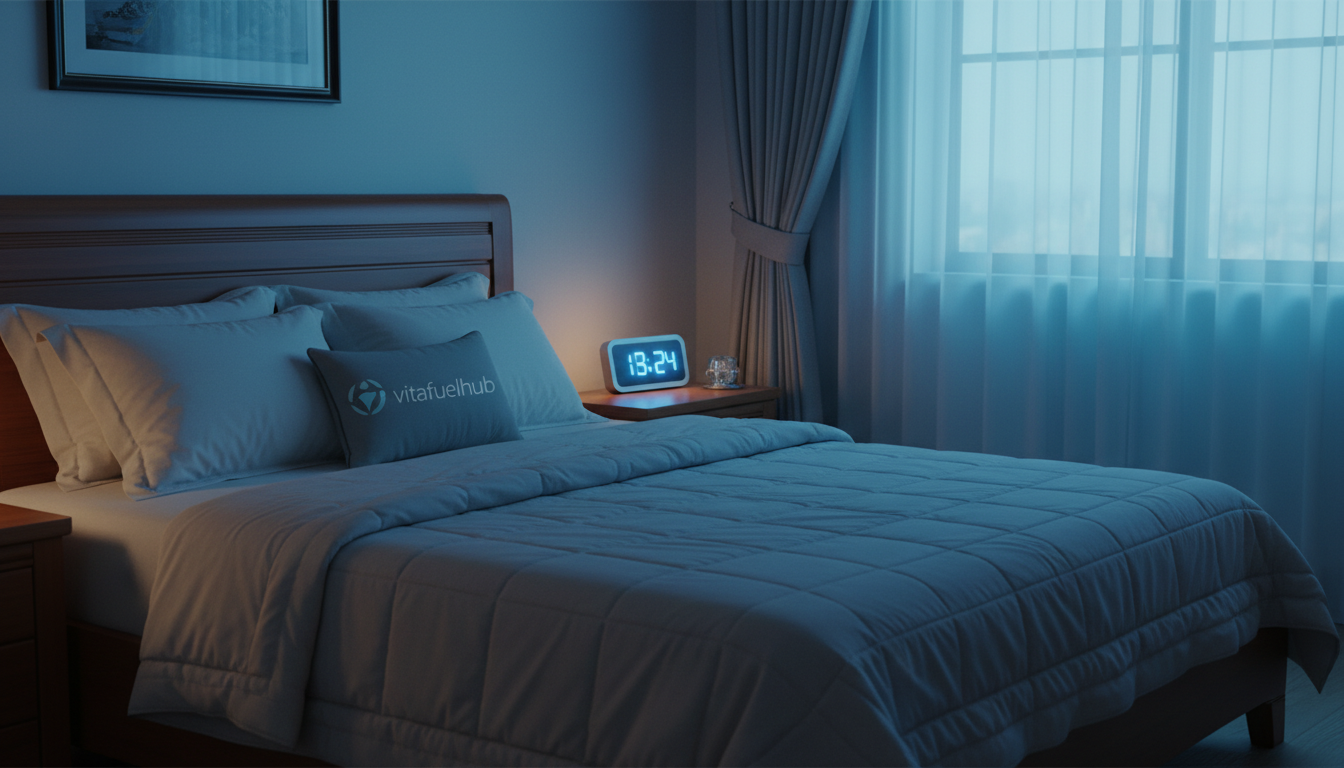

Surprising fact: a review of 36 studies found that late screen use can delay your internal clock by up to two hours, meaning many people lose optimal rest without knowing why.
The research shows that blue light and sleep are tightly linked through the brain’s clock. Evening exposure to screen glow suppresses melatonin, which reduces the chance of deep rest.
Many electronic devices emit this portion of the spectrum, so daily habits matter. Limiting device time before bedtime or using filters can protect your nightly rhythm and improve sleep quality.
Why it matters: better routines help attention, daytime energy, and long-term health by aligning the circadian rhythm with natural day and night cues.
Key Takeaways
- Screen exposure in the evening can shift your internal clock.
- Blue light affects melatonin and reduces deep rest.
- Thirty-six-study reviews link device use to lower sleep quality.
- Filters, glasses, or night modes can reduce harmful effects.
- Managing daytime and evening exposure supports better health.
Understanding the Science of Light
Visible energy affects biology. Visible wavelengths carry different energy levels. That energy helps the brain decide when to be alert or rest.
The Visible Spectrum
Our eyes sense a band of electromagnetic radiation we call the visible spectrum. Shorter wavelengths carry more energy. Those high-energy waves influence hormones and alertness.
How Eyes Interpret Energy
Special cells in the retina read wavelength energy and send signals to the brain’s clock. This process helps set the circadian rhythm and daily patterns of alertness.
- Daytime exposure to natural wavelengths boosts mood and focus.
- Late-evening exposure to strong high-energy wavelengths can delay drowsiness.
- Managing exposure helps align biological timing with the environment.
“Understanding wave energy explains why devices can interfere with nightly rest.”
Practical tip: increase natural daylight during the day and reduce bright screen use before bed to protect nightly rest.
How Blue Light and Sleep Interact
Exposure to certain wavelengths at night can shift your body’s readiness for rest.
Research from a 36-study review shows mixed effects. About one-third of studies found decreased sleep duration after blue light exposure.
Meanwhile, roughly two-thirds reported higher alertness and slower reaction times after evening exposure. That boost can help attention during the day but harms nightly recovery.
Many people notice more light sleep when they use devices close to bedtime. Managing exposure matters: timing changes whether the effects help performance or reduce quality of rest.
“A comprehensive review highlights both positive and negative outcomes, depending on when you are exposed.”
- Key point: daytime use can aid alertness and attention.
- Key point: evening exposure often cuts total sleep time and lowers quality.
Tip: limit screens in the hour before bed to protect nightly rest and improve daytime focus.
The Role of Melatonin in Your Nightly Rest
Tiny shifts in evening illumination can change the hormones that tell your body it’s time to rest. Melatonin is the key chemical that signals drowsiness and helps align the circadian rhythm with night.
Hormonal Regulation of Drowsiness
Melatonin production drops quickly when the eyes detect bright wavelengths. Harvard researchers found that blue light suppresses melatonin for about twice as long as green light of similar brightness.
Even very dim sources matter. Studies show that only eight lux—about twice a typical night lamp—can change melatonin levels. When levels fall, people take longer to fall asleep and report poorer quality rest.
- Melatonin regulates daily rhythms and is highly sensitive to evening light exposure.
- Harvard findings: blue light causes longer melatonin suppression than green light.
- Dim ambient glow as low as eight lux can disrupt hormone levels and lower sleep quality.
“Protecting evening darkness helps your body restore natural hormonal timing.”
| Factor | Effect on Melatonin | Impact on Rest |
|---|---|---|
| Daytime bright exposure | Normal rise/fall pattern | Improved sleep quality |
| Evening screen use | Suppression for extended periods | Delayed onset, lighter rest |
| Dim room light (~8 lux) | Partial suppression | Harder to fall asleep |
Why Modern Screens Disrupt Your Biological Clock
Many displays produce wavelengths that signal wakefulness when the body expects rest. Modern electronic devices emit significant amounts of this spectrum, which can trick the brain into thinking it is still daytime.
Dr. Charles Czeisler at Harvard showed in 1981 that daylight keeps our internal clock aligned with the environment. When screens send daytime cues at night, the brain delays the circadian rhythm.
That delay lowers melatonin and reduces sleep quality over time. Studies and clinical review work suggest the effects are cumulative: repeated evening exposure makes it harder to fall asleep and to reach deep rest.
- Devices emit high-energy wavelengths: they mimic daytime signals.
- Evening exposure suppresses melatonin: this shifts internal timing.
- Cumulative effects: repeated night use harms long-term sleep quality.
“Limiting electronic device use before bed helps preserve natural rhythms and improves overall rest.”
Common Sources of Artificial Blue Light
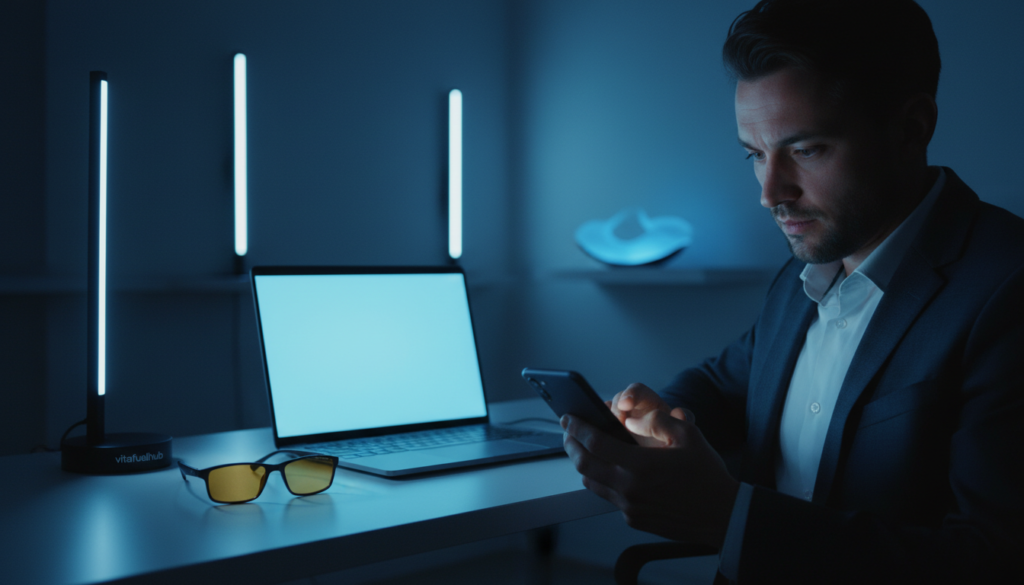
Household lighting and personal electronics are key sources that influence the brain’s timing cues. Knowing where this energy comes from makes it easier to reduce evening exposure and protect nightly rest.
LED and Fluorescent Fixtures
Many homes and offices now use LED bulbs and fluorescent tubes. These options save energy but often emit high-energy wavelengths that affect biological timing.
Smartphone and Tablet Screens
Handheld screens are close to the face for long stretches. Research and several studies link evening exposure from these devices to reduced sleep quality and delayed bedtimes.
Computer Monitors
Monitors used for work or streaming also produce the same wavelengths. Over time, evening screen use can shift your internal clock and lower overall rest quality.
- Tip: limit screen time before bed or try simple filters.
- Tip: using blue light blocking glasses may reduce harmful effects for some people.
“Being aware of common sources helps you take practical steps to protect nightly rest.”
The Impact of Evening Exposure on Alertness
Evening screen use can trigger alertness when the body should be winding down.
Research shows that blue light exposure in the evening raises alertness and slows reaction time. Multiple studies link this exposure to harder time falling asleep and poorer overall quality of rest.
Evening light exposure disrupts the natural transition into rest. That effect makes it harder to relax, lengthens time to fall asleep, and can shorten total sleep time.
Practical tip: reduce screen use in the hour before bed. Manage exposure in the two hours before your usual bedtime to help the brain prepare for rest.
| Factor | Effect | Practical Step |
|---|---|---|
| Blue light exposure at night | Increases alertness; delays drowsiness | Limit screens; use warm bulbs after dusk |
| Evening screen use | Reduces sleep quality and duration | Shift tasks earlier; enable night mode |
| Controlled evening environment | Supports faster sleep onset and deeper rest | Dim displays; wear blocking glasses if needed |
“Managing your evening environment is a key step in improving nightly recovery and daytime performance.”
Potential Long Term Health Consequences
When nightly routines keep the body from restoring itself, health problems can follow. Chronic disruption of nightly quality due to regular exposure at the wrong time may raise risks for serious conditions.
Research links persistent evening exposure to higher rates of obesity, type 2 diabetes, and cardiovascular disease. Several studies suggest that the effects on metabolic regulation come from repeated shifts in hormones and daily timing.
A systematic review of existing literature highlights how ongoing disturbance of rest quality can cascade into long-term health issues. The review stresses protecting nightly rest as a public health priority.
Practical step: minimize evening exposure by reducing screen time before bed, using filters, and dimming household fixtures. These changes can lower risk and improve overall health over time.
“Protecting your nightly rhythm is one of the simplest ways to support long-term well-being.”
- Chronic disruption may contribute to metabolic disorders.
- Reducing exposure lowers long-term risk for several conditions.
- Small habit changes often yield measurable gains in quality and health.
Benefits of Daytime Light Exposure
Getting bright daytime exposure helps your internal clock run on schedule. Natural sun during the day sends strong cues that improve mood and alertness. This daily signal makes it easier to fall asleep at your usual time.
Research shows that exposure blue light from the sun during daytime sets the circadian rhythm. Several studies report that bright light exposure boosts attention and cognitive performance. That supports work, learning, and overall quality of day-to-day function.
Maximizing daytime light exposure can also offset some effects of evening screen use. Simple habits—walking outside at lunch or keeping windows open—raise daytime exposure levels without extra effort.
“A dose of daylight each day helps anchor your body clock for better nightly recovery.”
| Focus | Daytime exposure | Practical tip |
|---|---|---|
| Circadian timing | Strong alignment; easier sleep onset | Get 20–30 min outside each morning |
| Mood & alertness | Improved attention and energy | Work near windows; take outdoor breaks |
| Counteracting evening effects | Reduces sensitivity to late screens | Maximize daylight; limit night exposure |
Evaluating the Use of Blue Light Blocking Glasses
Using targeted eyewear in the hour before bed can help your body read cues for rest. These glasses filter the wavelengths that suppress melatonin and delay drowsiness.
A University of Toronto study found evening melatonin levels were similar in people who wore blocking goggles and those kept in dim rooms. That result shows the devices can mimic low-evening conditions.
They are not perfect, but many studies report a clear improvement in sleep quality for users. Reducing exposure blue light while using screens helps the brain prepare for rest.
- Filters target problematic wavelengths to protect melatonin production.
- Research supports noticeable gains in sleep onset and depth for many people.
- Glasses are a practical tool when screens are unavoidable.
“If you need evening screen time, testing well-made glasses is a sensible step.”
| Option | Effect on Melatonin | Practical Benefit |
|---|---|---|
| Blocking glasses | Preserve evening melatonin levels | Helps fall asleep faster; wearer reports better rest |
| Dim room lighting | Partial protection | Improves readiness for rest but limits activity |
| Device night modes | Reduce some wavelengths | Helpful, but less effective than physical filters |
For a practical guide to choosing frames, check the best blocking glasses. Try a pair for a week to see real effects on your routine and quality of rest.
Adjusting Your Evening Routine for Better Rest
A calm evening routine can reset your body’s readiness for nighttime rest.
Start a low-exposure period at least two hours before bed. Turn off electronic devices to reduce blue light exposure and give melatonin a chance to rise.
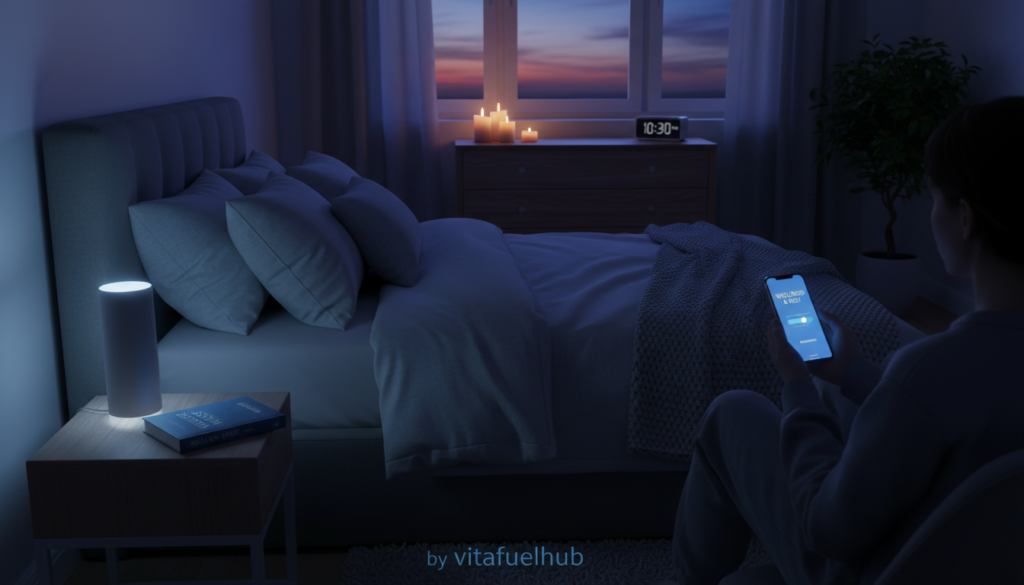
Many studies recommend 2–3 hours of screen-free time. Consistent timing each night improves sleep quality and often increases total sleep duration.
Practical steps: dim lamps, use warm bulbs near your bed, or wear blocking glasses if you must use a screen late. These actions cut evening stimulation and help your body unwind.
- Choose one hour for reading or quiet tasks before bedtime.
- Limit tasks that require bright screens in the final hours.
- Create a simple ritual to signal rest time to your body.
“Small changes to your evening routine can have a massive impact on how fast you fall asleep and how well you stay asleep.”
Utilizing Night Mode Features on Devices
Built-in display settings can cut harmful wavelengths without changing how you use your device. Most modern electronic devices now include night mode features that reduce emitted high-energy tones in the evening.
Research and several studies indicate that enabling night mode can lower the suppression of melatonin during bedtime hours. That change helps the body begin its natural winding down.
Night mode is useful, but it is not a full substitute for reducing total screen time before bed. Using the feature makes late tasks less disruptive, yet cutting device time is still best for recovery.
- Practical tip: schedule night mode to start two hours before your usual bedtime.
- Practical tip: combine night mode with dim room lighting or short breaks from screens.
- Practical tip: test settings for a week to see if your evening routine improves.
“Using built-in modes can reduce evening exposure and preserve nightly rest.”
To learn more about habits that support rest, consider resources that help you prioritize high‑quality rest.
Creating an Optimal Sleep Environment
An intentional sleep space lowers cues that tell your brain it’s still daytime. Remove bright sources and cut screen use near bedtime to reduce harmful blue light exposure.
Use dim bulbs or red-hued lamps in the evening. Research finds these choices protect melatonin levels and help most people fall asleep faster.
Make the room quiet and dark. Studies show a dark, calm bedroom improves how quickly you nod off and how deeply you rest.
Install blackout curtains, use an eye mask, and cover LEDs on devices. Even small stray brightness can shift your circadian rhythm and lower rest quality.
- Limit exposure: keep phones out of the bedroom after bedtime.
- Choose bulbs: use dim light or red bulbs in the hour before bed.
- Block stray glow: eye masks or curtains prevent disruption from outside sources.
“Investing in your room is a simple, proactive way to protect nightly recovery.”
Small changes at home create steady gains. Over time, this helps daytime focus, steadier energy, and a healthier rhythm.
When to Seek Professional Sleep Advice
When routine fixes don’t help, a medical evaluation can pinpoint why nights remain restless.
If poor rest continues despite reducing blue light exposure, consult a clinician. A provider can review symptoms, timing, and habits to find root causes.
Research links chronic problems to underlying health conditions. A clinical review can detect issues that simple habit changes miss.
- Specialists use questionnaires, wearable data, or a formal study to identify triggers.
- They can offer targeted plans to support melatonin production and daily rhythms.
- Seek care if daytime function or long-term health is affected by ongoing unrest.
Professional advice helps you navigate sleep medicine and find treatments suited to your needs. Don’t wait if problems persist over time.
“Early evaluation often leads to faster, safer improvements in nightly recovery.”
Balancing Technology Use with Healthy Habits
Setting clear boundaries for screens makes it much easier to keep steady daily rhythms.
Be mindful of evening exposure. Limit device use in the last hour before bed to reduce blue light exposure that delays hormonal cues for rest.
Use practical swaps: read a paper book, dim room lamps, or wear quality blocking glasses if you must use electronic devices late.
Day habits matter too. Getting sunlight earlier in the day helps counteract evening effects and improves daytime alertness.
- Schedule tech-free time each night to guard your health.
- Enable night modes and lower screen brightness after dusk.
- Follow simple routines so your body learns when to wind down.
“Small, consistent changes to how we use gadgets often yield the biggest gains in rest and well‑being.”
| Action | Effect | Simple Step |
|---|---|---|
| Limit evening device use | Reduces harmful exposure | Set a device curfew 60–90 minutes before bed |
| Increase daytime daylight | Strengthens rhythms and alertness | Walk outside 20–30 minutes each morning |
| Use filtering tools | Partially blocks problematic wavelengths | Enable night mode or try blocking glasses |
| Consistent schedule | Improves overall health and recovery | Keep regular bedtime and wake times |
Conclusion
Simple, consistent steps can reclaim your nightly rest. Research shows that managing evening exposure to screens and LED fixtures helps the brain reset its clock. Make a short tech curfew before bedtime and use night mode or quality blocking glasses when late tasks are unavoidable.
Small habits—more daytime sunlight, dimmer fixtures after dusk, and steady bedtimes—support better alertness, attention, and long-term health. Studies report real gains when people reduce exposure in the final hours before bed.
Take control of your environment and devices today. Consistent routines preserve your rhythms and deliver more restorative nights, plus clearer days and improved overall well‑being.