


7 Gastrointestinal Ailments That Spike Each Monsoon Season and What we are able to do about it
Introduction
You possibly can hearken to this text whereas scrolling down-
Each monsoon, hospitals in most components of India see a pointy rise in abdomen and intestinal infections coming to the OPDs.
I’ve seen related tendencies in my scientific follow too, each monsoon season.
The reason being easy: heavy rain contaminates water sources, floods drains, will increase humidity, and creates excellent circumstances for micro organism, viruses, and parasites to unfold.
Unsafe ingesting water, uncovered avenue meals, uncooked salads, poorly saved leftovers, and get in touch with with floodwater all increase the chance of gastrointestinal sickness.”
On this quick information I’ll clarify seven widespread gastrointestinal illnesses that spike throughout monsoon season, the signs to look at for, and the habits that may assist shield your loved ones.
In a while, I will likely be publishing detailed article on every illness talked about right here in separate articles every single day so that you’re properly knowledgeable about every of them.
Why GI Ailments Rise Throughout Monsoon
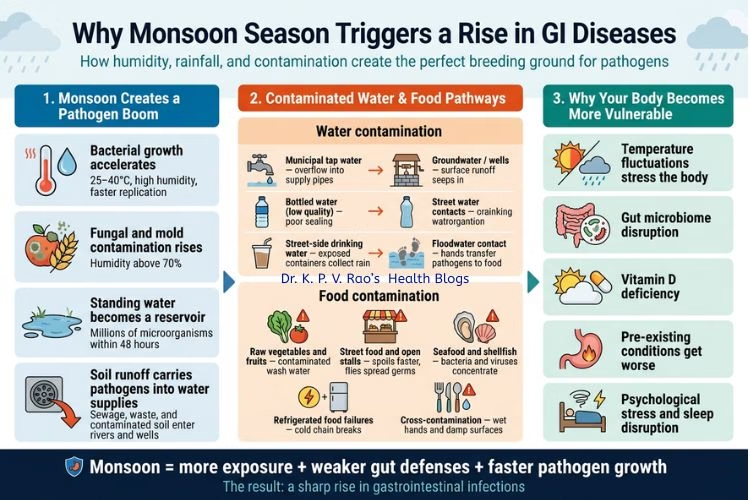
Rainwater usually mixes with sewage, rubbish, animal waste, and contaminated soil earlier than getting into wells, tanks, rivers, and municipal pipelines.
Waterlogging additionally encourages flies and different bugs, which switch germs from waste to meals.
Heat, humid climate hurries up bacterial progress in cooked meals, dairy, seafood, and reduce fruit. Even meals that appears and smells regular could also be unsafe if it has been uncovered to contaminated water or saved improperly.
Your physique may be extra weak throughout this season. Irregular sleep, decrease daylight publicity, dehydration, frequent antibiotics, and adjustments in weight loss program can have an effect on immunity and intestine stability.
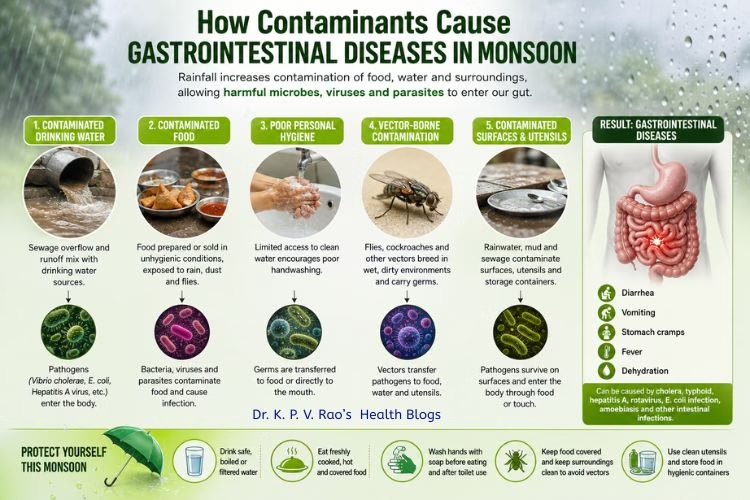
For individuals with acidity, or inflammatory bowel illness, monsoon infections can set off worse flare-ups.
1. Cholera
Cholera is a severe waterborne an infection attributable to Vibrio cholerae. It spreads rapidly when sewage contaminates ingesting water, ice, avenue drinks, or meals washed with unsafe water. The most important hazard is fast dehydration.
Look ahead to:
- sudden watery diarrhea [rice-water stools],
- vomiting,
- excessive thirst,
- muscle cramps,
- dry mouth,
- sunken eyes,
- weak point,
- dizziness, and
- little or no urination.
Extreme cholera can turn into life-threatening inside hours, particularly in kids and older adults. Extra on this in my subsequent article.
2. Typhoid Fever
Typhoid fever is attributable to Salmonella typhi and spreads via contaminated meals and water. It is not uncommon throughout monsoon as a result of floods overwhelm drains and sewage techniques, permitting micro organism to enter water provides and meals preparation areas.
Look ahead to:
- fever that rises steadily and lasts greater than three days,
- headache,
- weak point,
- stomach ache,
- poor urge for food,
- constipation or diarrhea, and
- generally faint rose-colored spots on the trunk. .
A persistent excessive fever throughout monsoon ought to by no means be ignored; visiting a health care provider and discussing these signs might help him pinpoint the illness and order acceptable investigations to verify typhoid.
3. Hepatitis A
Hepatitis A is a viral liver an infection that spreads via the fecal-oral route.
Throughout monsoon, uncooked greens, reduce fruits, shellfish, avenue meals, and ice comprised of untreated water turn into main sources of publicity.
Look ahead to:
- uncommon fatigue,
- nausea,
- lack of urge for food,
- delicate fever,
- stomach discomfort,
- darkish urine,
- pale stools, and
- yellowing of the eyes or pores and skin.
Early signs are sometimes mistaken for seasonal tiredness, so testing is essential if signs persist.”
4. Gastroenteritis
Gastroenteritis is likely one of the most typical monsoon abdomen infections.
It may be attributable to micro organism similar to E. coli, Salmonella, and Campylobacter, or viruses similar to norovirus and rotavirus.
It often spreads via contaminated meals, unsafe water, unwashed fingers, and meals left uncovered in humid circumstances.
Look ahead to:
- unfastened stools,
- vomiting,
- nausea,
- cramps, fever, bloating, and
- weak point.
Most delicate instances enhance in two to 3 days with relaxation and fluids. Search medical assist if diarrhea lasts greater than three days, vomiting prevents ingesting, fever is excessive, stool comprises blood, or indicators of dehydration seem.
5. Dysentery
Dysentery causes infected intestines and bloody or mucus-filled stools.
It might be bacterial, generally resulting from Shigella, or amoebic, attributable to Entamoeba histolytica.
Each kinds rise throughout monsoon as a result of open drains, floodwater, and contaminated greens unfold organisms extensively.
Look ahead to:
- blood or mucus in stool,
- extreme cramps,
- fever, particularly in shigella
- frequent urge to move stool, and
- weak point.
Don’t self-medicate with anti-diarrheal tablets, as they might worsen some infections. Blood in stool ought to all the time be evaluated by a health care provider.
6. Giardiasis
Giardiasis is a parasitic an infection attributable to Giardia, a parasite much like ameoba.
It spreads via contaminated water, uncooked produce, and poor hand hygiene. Floodwater can carry parasite cysts into wells, tanks, and different water sources.
Look ahead to:
- foul-smelling diarrhea, particularly post-eating
- gasoline, bloating,
- abdomen cramps,
- nausea,
- fatigue, and
- greasy or floating stools.
Signs could final for weeks if untreated and might intervene with nutrient absorption, particularly in kids.”
7. Cryptosporidiosis and Rotavirus
Cryptosporidiosis is attributable to Cryptosporidium, a parasite that may survive in water and is more durable to get rid of with primary chlorination. Rotavirus is a extremely contagious viral an infection that spreads via contaminated fingers, surfaces, meals, and water.
Each are particularly harmful for younger kids, older adults, and other people with weak immunity.”
Look ahead to:
- watery diarrhea,
- vomiting, fever,
- abdomen ache, tiredness, and dehydration.
- in kids, warning indicators embody dry mouth, no tears whereas crying, sunken eyes, lowered urination, uncommon sleepiness, or incapacity to maintain fluids down.
Shield Your self Throughout Monsoon

Listed here are some tricks to maintain your self wholesome throughout monsoons and stop GI diseases-
- Drink boiled, filtered, or sealed bottled water.
- Keep away from ice, roadside juices, and water from unknown sources.
- Eat freshly cooked meals served scorching.
- Keep away from uncooked salads, reduce fruits, uncooked seafood, and uncovered avenue meals throughout heavy rains.
- Wash fingers with cleaning soap earlier than consuming, after utilizing the bathroom, and after contact with floodwater.
- Retailer cooked meals lined and refrigerated; reheat leftovers completely.
- Preserve ORS packets at house and use them early throughout diarrhea or vomiting.
Ask your physician about typhoid, hepatitis A, cholera, and rotavirus vaccines when acceptable.
When to See a Physician
Get medical care rapidly if signs embody
- blood in stool,
- persistent vomiting,
- excessive fever,
- extreme stomach ache,
- diarrhea lasting greater than three days,
- darkish urine with jaundice, confusion, dizziness, or indicators of dehydration.
Kids, pregnant ladies, aged individuals, and immunocompromised people ought to search assist earlier, even when signs appear delicate.
Monsoon GI illnesses are widespread, however many are preventable. Clear water, protected meals, hand hygiene, vaccination, and early rehydration can dramatically cut back your threat.
The rains could also be unavoidable, however severe abdomen infections should not have to be.”
Associated Article- Monsoon illnesses
Right here I finish this quick article about 7 gastrointestinal illnesses that have an effect on us throughout the monsoon.
In my subsequent article, we are going to be taught all about cholera.