


Surprising fact: studies show up to 30% greater overnight repair in adults who eat a small protein snack late in the evening.
If you train hard, this matters. Consuming protein before bed may help reduce soreness and support muscle recovery after tough training sessions.
Research suggests that adding a small amount of protein late at night can aid growth and help maintain muscle mass as you age. Greek yogurt is a simple, real-food source that many athletes use to hit daily grams targets.
Why it counts: during sleep the body repairs tissue and builds strength. The right snack and timing can support recovery, fat metabolism, and even weight loss goals when paired with a good plan.
Key Takeaways
- Eating a small protein snack at night may boost overnight muscle repair.
- It can help increase muscle mass strength over time for many adults.
- Greek yogurt is a convenient source to reach daily grams needs.
- Nighttime intake may support fat metabolism and weight loss efforts.
- Timing your intake is one simple way to improve recovery after training.
The Science of Muscle Recovery During Sleep
Overnight recovery hinges on hormone cycles and the availability of amino acids to sustain tissue repair. This window is when the body uses what you eat earlier and what you supply at night to rebuild after training.
The Role of Amino Acids
Amino acids are the building blocks that stop muscle breakdown and support building new tissue. Moore et al. (2009) found ~20g often maximizes daytime synthesis, while Res et al. (2012) showed 40g of casein protein taken at night boosts overnight synthesis.
“Forty grams of casein consumed before sleep increases muscle protein synthesis overnight.”
Growth Hormone and Tissue Repair
During deep sleep the body releases growth hormone, which aids repair after resistance training. Groen et al. (2011) demonstrated that even intragastric intake at night can stimulate synthesis.
Practical point: slow-digesting casein vs faster whey protein offers sustained amino availability through the night, helping muscle growth and recovery while you rest. Van Loon’s research supports timing as a useful strategy to reach weight and strength goals.
Benefits of Consuming Protein Before Bed
Eating a targeted snack at night can give muscles steady nutrients while you sleep. This approach supports recovery and helps the body repair tissue after resistance training.
Research backs the idea. A 2019 review found that protein consumption at night can increase muscle mass and strength over time. Many athletes use this strategy to boost muscle growth and reduce next-day soreness.

“Protein consumption before sleep is a beneficial strategy for those looking to increase muscle mass and strength.”
- May improve overnight recovery and lessen soreness after training.
- Can help preserve muscle mass in older adults and support weight loss goals.
- Consistent consumption at night pairs best with a structured program for building mass.
| Benefit | Who it helps | Evidence |
|---|---|---|
| Enhanced recovery | Resistance training athletes | Improved synthesis overnight (2019 review) |
| Muscle mass strength | Older adults & lifters | Shows greater gains over time |
| Satiation & weight loss | Dieters | May reduce late-night snacking |
| Reduced soreness | Active trainees | Users report less morning discomfort |
Determining Your Daily Protein Requirements
Figuring out daily needs starts with your weight and how hard you train.
Your baseline is the recommended daily allowance of 0.8 grams per kilogram of body weight for the average sedentary adult. This level supports basic body maintenance but often falls short for active people.
Adjusting for Athletic Training
Athletes need more: endurance and resistance training raise requirements to roughly 1.5 grams per kilogram. Some experts suggest 1.8–2 grams per kilogram for heavy training or intense recovery phases.
For an adult who weighs 81 kilograms (180 pounds), that range equals about 121.5 to 162 grams protein daily. Tracking daily grams helps prevent muscle loss during hard training and supports performance goals.
- Use body weight × target grams to calculate your daily intake.
- Balance total calories if you aim for weight loss so muscle stays protected.
- Consider a small snack at night to help meet higher daily nutrition needs while you sleep.
Best Food Sources for Your Nightly Routine
Choosing the right evening snack can shape how your muscles recover while you sleep. Aim for sources that release amino acids slowly and support growth without excess calories.
Whole Food Options
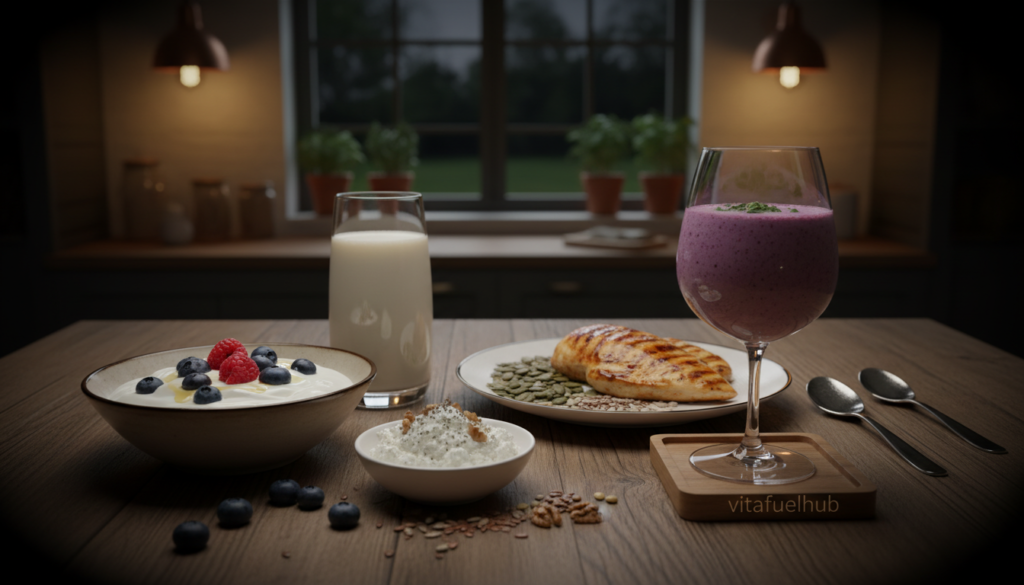
Greek yogurt, cottage cheese, and milk supply casein naturally and bring vitamins and minerals that powders lack.
Whole foods also help with fat metabolism and satiety. Keep portions to match your target grams and weight goals.
The Role of Casein
Casein forms a gel in the stomach, slowing digestion and keeping amino acids available through the night.
“A 2020 study gave 40 grams of casein protein 30 minutes before sleep and found improved overnight synthesis.”
Practical point: casein protein is ideal when steady amino delivery matters for recovery and growth.
Supplements vs Whole Foods
Whey protein is fast-absorbing and useful around training time, while casein or whole dairy are better for lasting overnight supply.
- Choose whole foods first for vitamins and minerals.
- Use a casein shake if you cannot reach grams targets with food.
- Check labels to avoid excess sugar or fat that can affect weight goals.
| Source | Speed | Best use |
|---|---|---|
| Greek yogurt / cottage cheese | Slow (casein-rich) | Nightly snack for recovery |
| Milk | Moderate | Simple whole-food option |
| Casein supplement | Slow | When grams protein are needed |
| Whey protein | Fast | Post-workout, not ideal for sleep |
Important Considerations for Specific Health Needs
Not everyone benefits the same from a recovery snack at night. If you have chronic conditions, especially kidney disease, talk to a healthcare professional before changing your routine.
Monitor total protein intake and overall fat. Casein protein and whey protein are common sources, but individual needs vary. Your doctor can help decide which source fits your body and weight goals.
Amino acids support muscle repair and sleep recovery, yet too much protein may stress impaired kidneys. Use whole-food sources like greek yogurt carefully within your calorie and fat metabolism plan.
“Consult a healthcare professional before significantly increasing your daily protein intake.”
- Check kidney function if you plan higher protein intake.
- Balance intake for weight loss so muscle stays protected.
- Choose casein for steady overnight release or whole dairy as a simple source.
| Health Factor | Consideration | Suggested Action |
|---|---|---|
| Kidney disease risk | High intake can strain kidneys | Consult nephrologist and monitor intake |
| Weight loss goals | Need to protect muscle while reducing calories | Use moderate portions, track fat metabolism |
| Digestive tolerance | Dairy may affect some people | Try casein supplement or alternative sources |
Conclusion: Optimizing Your Nightly Protein Intake
B: Finishing the day with a small, slow-digesting serving helps sustain amino availability through the night. ,
Consuming protein sleep strategies—especially using casein protein—can support overnight recovery and boost muscle growth and muscle mass when paired with steady training. Research by van Loon and others shows casein helps keep amino acids available for synthesis during sleep.
Optimize intake with whole foods or supplements, keep portions consistent, and focus on total daily targets. For practical snack ideas and meal plans, see this guide to muscle-building meals. Small, regular steps may help you reach your goals faster and improve recovery.