

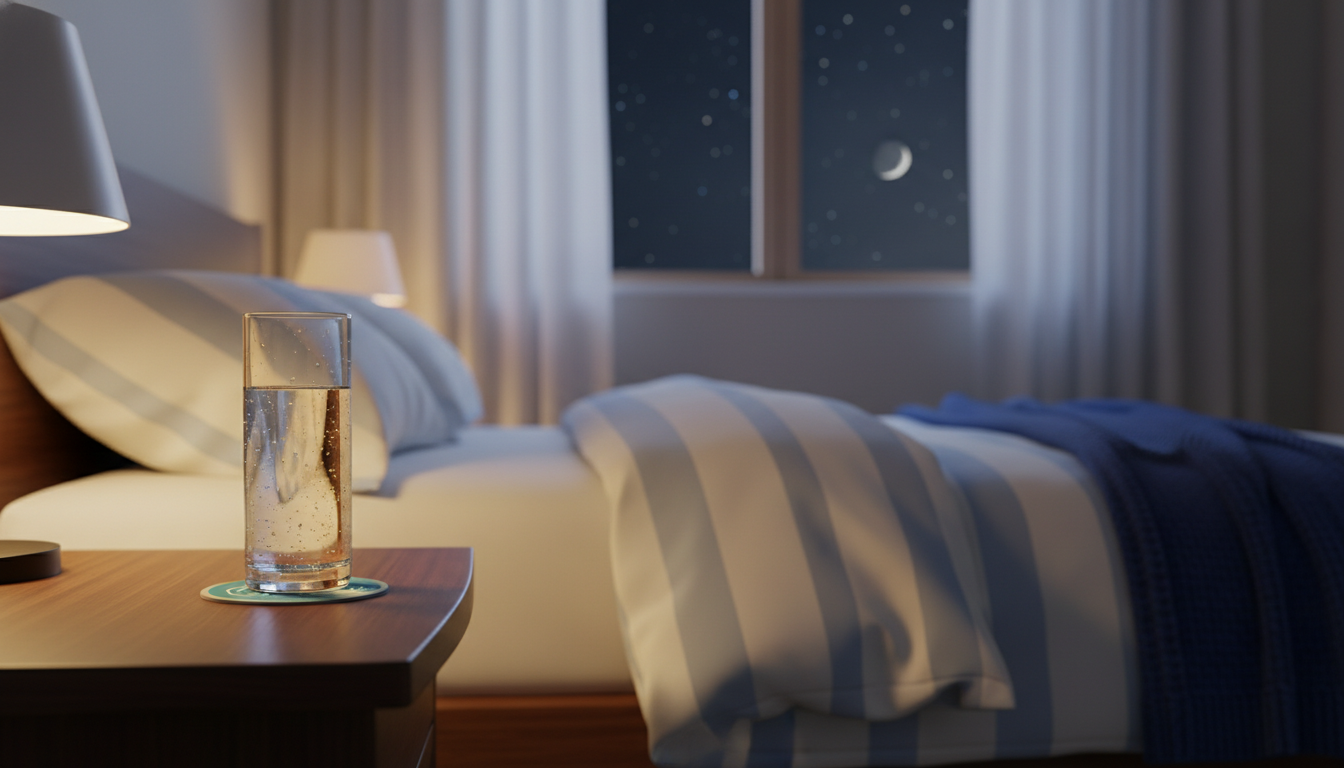

Surprising fact: the average adult’s body is more than 50% water, yet many of us go seven or more hours each night without a single sip.
The long stretch from bedtime to morning is the longest time your body goes without fluid. Going to bed without enough water can cause dry mouth, restless nights, and lower sleep quality.
Experts suggest that sleep disruptions may alter vasopressin release, which helps the body retain water. This can create a feedback loop where poor sleep worsens dehydration and low water levels then affect sleep further.
Most adults need about two liters of water a day, though activity, illness, or breastfeeding can raise that need. Managing alcohol, medications, and conditions like apnea also helps protect overnight recovery.
Key Takeaways
- More than half of the human body is water, making fluid balance vital for nightly recovery.
- Going to bed without enough water can trigger dry mouth and worse sleep quality.
- Sleep interruptions may reduce vasopressin, increasing risk of dehydration.
- Most adults aim for roughly two liters daily; needs rise with exercise or illness.
- Watch alcohol and medications to limit overnight fluid loss and related effects.
The Vital Connection Between Hydration and Sleep
While you sleep, tiny chemical signals work to hold onto the fluids your body needs. These signals help balance fluid levels during the long hours of rest. When that balance breaks, health problems can follow.
The Role of Vasopressin
Vasopressin is the key hormone the brain releases at night to reduce urine output and conserve water. This mechanism helps adults wake with more stable fluid levels.
“Vasopressin is a critical component of the sleep-wake cycle,” — National Center for Biotechnology Information.
The Sleep-Wake Cycle
Disrupted rest can blunt vasopressin release. Chronic lack of rest may strain kidneys and make regulating fluids harder. That raises the risk of dehydration and affects recovery.
- Night hormone release lowers urine production and preserves water.
- Poor rest can impair kidney function and fluid control.
- Alcohol reduces vasopressin, which often leads to worse sleep and more fluid loss.
Understanding these links helps you protect recovery overnight. Small changes to routines can support balance and better rest.
How Dehydration Impacts Your Sleep Quality
Even mild dehydration can produce night-time symptoms that break rest and lower recovery.
Dry mouth, headaches, and muscle cramps are common signs that low fluid levels may be affecting your night. These symptoms often wake people and make it hard to return to rest.
A large 2018 study of more than 20,000 adults in the U.S. and China found that those sleeping about six hours were more likely to show signs of inadequate water. That links shorter rest with higher risk of dehydration.
Poor sleep and low fluids can feed each other. You may wake thirsty at night, struggle to fall back asleep, then face daytime fatigue that harms overall health.
Small trials support this link. A 2023 pilot study reported slightly higher sleep efficiency in participants who kept proper fluid levels.
“Maintaining steady fluid levels helps preserve restorative stages of rest.”
Limit alcohol before bed and try simple daytime strategies to keep levels steady. For more practical tips, see this morning routine idea.
Managing Fluid Intake Throughout the Day
What you eat and sip during the day sets the stage for overnight recovery. Small, steady habits reduce the urge to drink heavily at night and help preserve restful hours.
Choosing Hydrating Foods
Eat more high-water fruits and vegetables such as watermelon, oranges, pears, spinach, squash, and carrots. These choices boost fluid intake without extra drinks.
Snacking on these items keeps your body topped up and supports better sleep later.
The Impact of Caffeine
Caffeine is a stimulant and can raise trips to the bathroom. Stop caffeine at least eight hours before bed to limit urination and late-night wakes.
If you exercise late, swap coffee for herbal teas earlier in the evening to avoid lingering effects.
Limiting Alcohol Consumption
Alcohol and some medications act as diuretics and can cause dehydration and disrupted rest. Manage evening drinks carefully and talk to your doctor if you have conditions like sleep apnea.
- Carry a reusable water bottle to sip steadily through the day.
- Drink enough water during daytime hours so you don’t need large amounts at the bed hour.
“Consistent fluid habits across the day help adults wake refreshed and reduce night interruptions.”
Creating an Optimal Sleep Environment
A calm, cool bedroom helps your body hold onto needed fluids through the night. Small changes to room moisture and temperature reduce the risk of overnight water loss and make rest more restorative.
Managing Bedroom Humidity
Keep humidity between 40% and 60% to prevent excessive water loss from the body at night. Too-dry air draws moisture from skin and mucous membranes. Too-wet air can encourage mold and discomfort.
Use a humidifier or place a shallow basin of water near a safe heat source to raise moisture when needed. Running a dehumidifier helps in very humid climates.

- Set room temperature near 65°F (18.3°C) to reduce night sweats and water loss.
- A steady, cool room improves restorative stages of rest and body recovery.
- Adjust vents, bedding, and fan placement to maintain even levels without drafts.
| Factor | Recommended Range | Why it matters |
|---|---|---|
| Humidity | 40%–60% | Prevents excessive fluid loss from skin and mouth |
| Temperature | ~65°F (18.3°C) | Reduces sweating and improves comfort |
| Airflow | Gentle, steady | Balances moisture without causing drafts |
A comfortable, cool, slightly humid room helps your body retain fluids and wake feeling refreshed. For extra tips on preparing the room and falling into rest faster, see our tips for falling asleep.
Addressing Factors That Disrupt Your Rest
Certain illnesses and medications raise the chance you’ll wake thirsty or need to urinate at night. Conditions such as diabetes, kidney disease, and Sjögren’s syndrome can cause persistent dry mouth and raise the risk of overnight dehydration.
If you take diuretics or other drugs that increase trips to the bathroom, talk with a healthcare professional about timing or alternate treatment options. Adjusting when you take a pill can sometimes reduce nighttime disruption.
Night sweats may signal menopause or other medical issues. Seek medical evaluation when heavy sweating wakes you often; untreated problems can further affect sleep and fluid balance.
- Persistent dry mouth or thirst may need medical care for underlying conditions.
- Discuss diuretics with your doctor to reduce late-night urination.
- Address sleep apnea and other disorders to prevent poor sleep and fluid loss.
- Replenish water after late exercise and keep your bedroom cool to limit fluid loss from heat.
| Cause | How it affects rest | Practical step |
|---|---|---|
| Diabetes | Increases thirst and nighttime urination | Monitor glucose; consult care team |
| Diuretics | Raise bathroom trips at night | Discuss dosing time with physician |
| Night sweats / Menopause | Cause waking and fluid loss | Seek evaluation; adjust room temperature |
“Addressing medical causes and medication timing can reduce interruptions and improve rest.”
Strategies for Reducing Nighttime Urination
Small evening habits can cut down on trips to the bathroom and help you sleep longer. Use practical changes to lower bladder activity while you rest.
Elevating Your Legs
Elevate your legs 20–30 minutes before bed. Lying with feet raised helps fluid move from swollen ankles back toward the torso.
This shift can reduce pressure on the bladder at night for many adults.
Timing Your Last Glass
Try to pee right before you go to bed to start the night with an empty bladder. Aim to limit fluids in the two hours before bed while you still stay hydrated throughout day.
Use a water bottle during the day, but be mindful of when you take your final drink.
- Avoid caffeine and alcohol in the evening; both raise urination and disturb rest.
- If you wake with a dry mouth, keep a small glass of water by the bed and sip just enough to ease discomfort.
- Cut late-day salt and heavy protein; these can boost urine production at night.
- Review medications with your clinician if nighttime trips are frequent.
“Small timing and posture changes often reduce night wakings without complex remedies.”
| Strategy | How it helps | When to try |
|---|---|---|
| Leg elevation | Moves pooled fluid away from ankles to reduce bladder pressure | 20–30 minutes before bed |
| Limit evening fluids | Reduces urine production during night hours | Stop large drinks 2 hours before bed |
| Adjust diet | Lower salt/protein late to avoid extra urine | Evening meals and snacks |
Conclusion: Prioritizing Hydration for Better Recovery
Making steady fluid choices throughout day helps your body repair while you rest at night. Small routines keep water levels steady, reduce dehydration risk, and improve overall sleep quality.
Limit alcohol near bedtime and time your last drink to avoid needless trips to the bed. Keep a refillable bottle nearby as a simple habit that supports better sleep and daily performance.
If thirst or frequent wakings persist, seek care. A doctor can offer treatment options and the right information for underlying issues.
Consistent attention to fluid habits is one of the easiest ways to protect recovery, boost health, and feel refreshed each morning.