



Surprising fact: elite athletes can spend up to 60% of their training week on recovery, not training.
Recovery matters because the body rebuilds strength when you rest. Good sleep and solid nutrition power muscle repair and growth. These basics beat pricey gadgets most of the time.
Your body type and goals shape the best plan. Hydration, protein intake, and consistent sleep form a reliable foundation. When you manage stress and blood flow, energy and performance improve the next day.
Think long term. View recovery as an investment in strength and injury risk reduction. Small daily habits yield steady performance recovery across weeks and sports seasons.
Key Takeaways
- Prioritize sleep and balanced nutrition over unproven supplements.
- Hydration and protein support muscle repair and energy for sessions.
- Consistent rest lowers injury risk and boosts long-term strength.
- Tailor recovery strategies to body type and training goals.
- See recovery as a daily, systemic approach for better performance.
Understanding the Physiology of Muscle Repair
Intense sessions damage tiny muscle fibers, and that damage sparks the rebuilding process. Repeated contractions cause microscopic tears in the fibers. The body treats these micro-injuries as signals to adapt and grow stronger.
The Role of Micro-tears
Micro-tears explain most post-exercise soreness. This soreness is a sign the body is responding and beginning tissue repair. With consistent training, muscles adapt and performance improves.
Managing Inflammation
Inflammation is part of the natural recovery cycle. It brings cells and nutrients that rebuild damaged tissue.
- Avoid routine use of ibuprofen or strong anti-inflammatories when healing is desired.
- Respect rest periods so the body can complete the repair and gain strength.
- Balance intensity and recovery to lower injury risk and boost long-term gains.
| Stage | What Happens | Practical Tip |
|---|---|---|
| Immediate | Micro-tears form in muscle fibers | Cool down with light movement |
| Inflammatory | Immune cells clear debris and signal repair | Avoid unnecessary anti-inflammatories |
| Rebuilding | Protein synthesis restores and strengthens tissue | Provide protein and quality sleep |
How to Recover Faster After Workout Through Nutrition
What you eat in the hours around training directly changes how your muscles rebuild.
Protein Intake Strategies
Aim for high-quality protein throughout the day. Research suggests about 1.6g per kg of body weight daily supports growth and repair.
Consume 20–40 grams of complete protein within a few hours of intense exercise to trigger protein synthesis.
Replenishing Glycogen Stores
Refill energy stores by taking 1.0–1.2g of carbohydrates per kg of body weight within four hours. Pair carbs with protein for better glycogen restoration and performance recovery.
Importance of Balanced Meals
Balanced plates of lean protein, complex carbs, and vegetables sustain steady energy and lessen soreness across days of training.
“Nutrition is the foundation of muscle repair; consistent habits beat occasional extremes.”
| Goal | Target | Timing |
|---|---|---|
| Daily protein | ~1.6 g/kg | Spread over day |
| Post-session protein | 20–40 g complete | Within a few hours |
| Carbohydrate refill | 1.0–1.2 g/kg | Within 4 hours |
The Role of Hydration and Electrolytes
Maintaining blood volume through smart hydration preserves performance and limits soreness.
Proper hydration keeps the body cool and sustains blood flow that delivers oxygen and nutrients to tired muscles. Dehydration lowers performance and makes muscle repair less efficient.
Aim for a practical target: drink 1.5 liters of water for every kilogram lost during a session. That guideline helps rebuild fluid stores and reduces the risk of dizziness or prolonged fatigue.

Electrolytes like sodium and potassium matter for neuromuscular function. Sports drinks with these minerals can help replace what sweat removes and lower cramping risk.
- Hydration supports blood volume and core temperature control during training.
- Electrolyte balance aids nerve signals and healthy muscle contractions.
- Monitoring urine color or body weight changes is an easy way to track fluid status.
“Staying hydrated is one of the simplest strategies that supports muscle recovery and sustained performance.”
For practical guidance and more tips on structured recovery, see this exercise muscle restoration guide.
Optimizing Sleep for Peak Performance
Deep, consistent sleep drives hormonal signals that guide muscle repair and growth. Nightly rest is when the body rebuilds torn fibers and restocks energy stores. Treat sleep as a planned part of training, not a luxury.
Hormonal Benefits of Deep Sleep
During deep sleep, the body ramps up growth hormone release. That hormone helps with repair, protein synthesis, and muscle growth. Most adults get the benefits with 7–9 hours per night.
- 7–9 hours of quality sleep supports muscle recovery and performance.
- Elite athletes often log 10 hours or more after intense training sessions.
- Sleep loss impairs stress regulation and slows glycogen stores replenishment, which reduces energy for future training.
- Optimize the sleep environment: cool room, dark space, consistent hours.
“Sleep is when your body focuses on rebuilding energy reserves and repair.”
Consistent rest habits lower soreness and help the body manage hydration, protein needs, and stress. Make sleep a central part of any plan that values long-term gains and fewer missed sessions.
Incorporating Active Recovery Techniques
Gentle movement and targeted treatments speed the body’s natural repair process. Light cycling, walking, or an easy swim increases blood flow and helps clear metabolic byproducts that cause soreness.
Massage has solid support: a 2020 review found it reduces delayed onset muscle soreness and eases tension between sessions.
Compression garments also show benefits. A 2019 study reported faster muscle recovery for handball players who wore compression for 24 hours.
“Consistent, small recovery strategies preserve performance and keep training sustainable.”
- Use light active recovery the day after intense training to boost circulation.
- Consider massage or foam rolling to lower onset muscle soreness.
- Try tart cherry juice in the days around sessions to reduce inflammation.
- Cryotherapy and compression can cut recovery time for high-level athletes.
| Technique | Benefit | Practical Tip |
|---|---|---|
| Active movement | Improves circulation; reduces soreness | 10–30 min light bike or walk |
| Massage / foam roll | Decreases delayed onset muscle pain | Focus 5–10 min on tight areas |
| Compression / cryotherapy | Speeds recovery for intense sessions | Wear 24 hrs or brief cold exposure |
| Nutrition & hydration | Supports repair and reduces dehydration | Include protein, fluids; try cherry juice |
Stress management matters too: lower stress preserves sleep and hydration, so the body can rest and rebuild. Combine methods for steady, long-term gains in performance.
Supplements That Support Muscle Growth
Well-researched supplements like creatine and quality protein powders help the body rebuild and maintain strength.
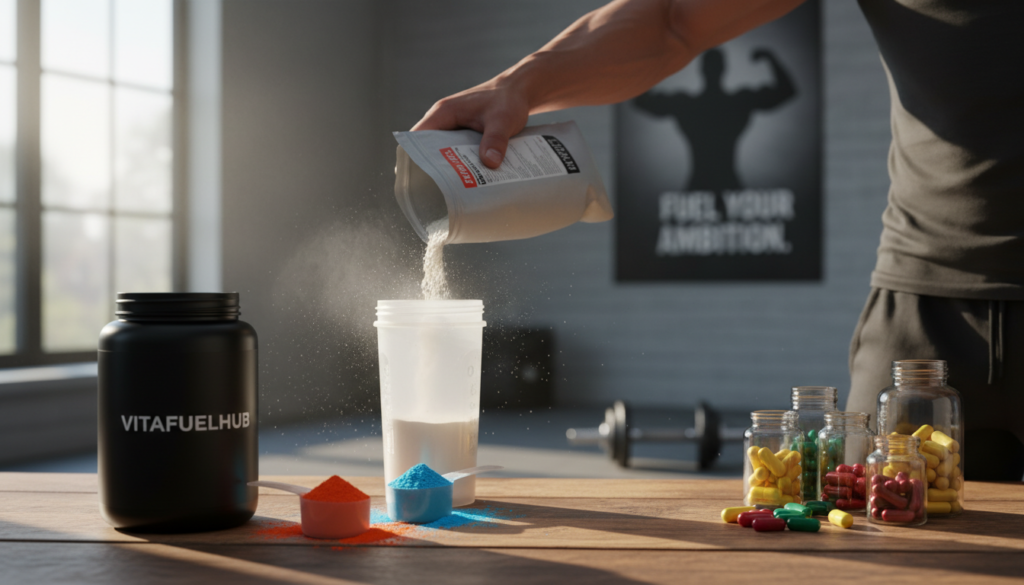
Creatine monohydrate is one of the most studied options. It can boost muscular strength and help refill glycogen stores after intense training. Research also links creatine with reduced muscle damage and lower inflammation.
Protein powders — whey, soy, and casein — give a full range of essential amino acids. They make meeting daily protein goals easier and support muscle recovery and growth when combined with whole-food meals.
- Creatine: improves strength and aids glycogen stores.
- Protein powder: convenient source of essential amino acids.
- Combine with food: supplements work best alongside balanced nutrition and adequate sleep.
“Supplements can fill small gaps, but whole foods should remain the foundation of any plan.”
Habits and Behaviors to Avoid
Certain daily habits quietly undo hours of hard training and stall recovery. Poor choices can raise blood pressure, disrupt sleep, and slow muscle repair.
Alcohol lowers sleep quality and interferes with protein synthesis. Regular drinking adds no nutrition and can raise the long-term risk of muscle loss.
Smoking harms the musculoskeletal system. It increases injury risk, weakens joints, and raises chances of fractures that derail training.
- Avoid alcohol around heavy sessions; it impairs rest and blood flow needed for repair.
- Quit tobacco to protect joints, bones, and long-term performance.
- Minimize behaviors that spike blood pressure, since high pressure hampers the body’s repair system.
“Remove habits that steal recovery time; your muscles and sleep will thank you.”
| Behavior | Impact on Recovery | Practical Replace |
|---|---|---|
| Regular alcohol use | Worse sleep, slower muscle repair | Swap with water, herbal tea, or electrolyte drinks |
| Tobacco | Higher injury and joint risk | Seek cessation support and clean-air routines |
| Chronic stress / poor sleep habits | Reduced protein synthesis; fatigue | Prioritize consistent sleep schedule and wind-down rituals |
| High blood pressure triggers | Reduced circulation for muscle healing | Lower sodium, add activity, consult a clinician |
Clear choice: eliminate these habits so your body can focus on repair, reduce soreness, and protect performance and long-term health.
Preventing Injury During Your Recovery Phase
Smart pacing of intensity helps your body adapt without unnecessary injury risk.
Preventing injury relies on small, steady increases in training. Sudden spikes in volume or load raise the risk of strains and overtraining.
Design weekly plans that target alternate muscle groups. This gives each area proper time to repair and keeps strength gains steady.
A challenging session often needs two to three days of rest; very intense workouts may take longer. Always finish sessions feeling challenged, not fully depleted.
- Increase intensity in small steps so tissues adapt.
- Watch for persistent muscle soreness beyond 72 hours; it may signal extra rest is needed.
- Schedule sessions by groups so muscles have full recovery windows.
| Plan | Rest | Practical tip |
|---|---|---|
| Moderate session | 24–48 hours | Light activity next day |
| Challenging session | 48–72 hours | Alternate muscle groups |
| Very intense | 72+ hours | Reduce load; monitor fatigue |
“Respect the time your muscles need; small pauses prevent big setbacks.”
Conclusion
,
Small, daily choices add up and protect your muscles across weeks of training.
Maximizing muscle recovery is a vital part of any successful plan. Focus on steady nutrition and quality sleep to fuel muscle repair.
Listen when onset muscle soreness lingers or becomes delayed. Ignoring that signal raises the risk of injury and stalls progress.
Rotate training groups and include light exercise days. That balanced approach helps reduce muscle soreness and supports long-term performance.
Make recovery a habit. Consistent care means better exercise results and fewer setbacks.