

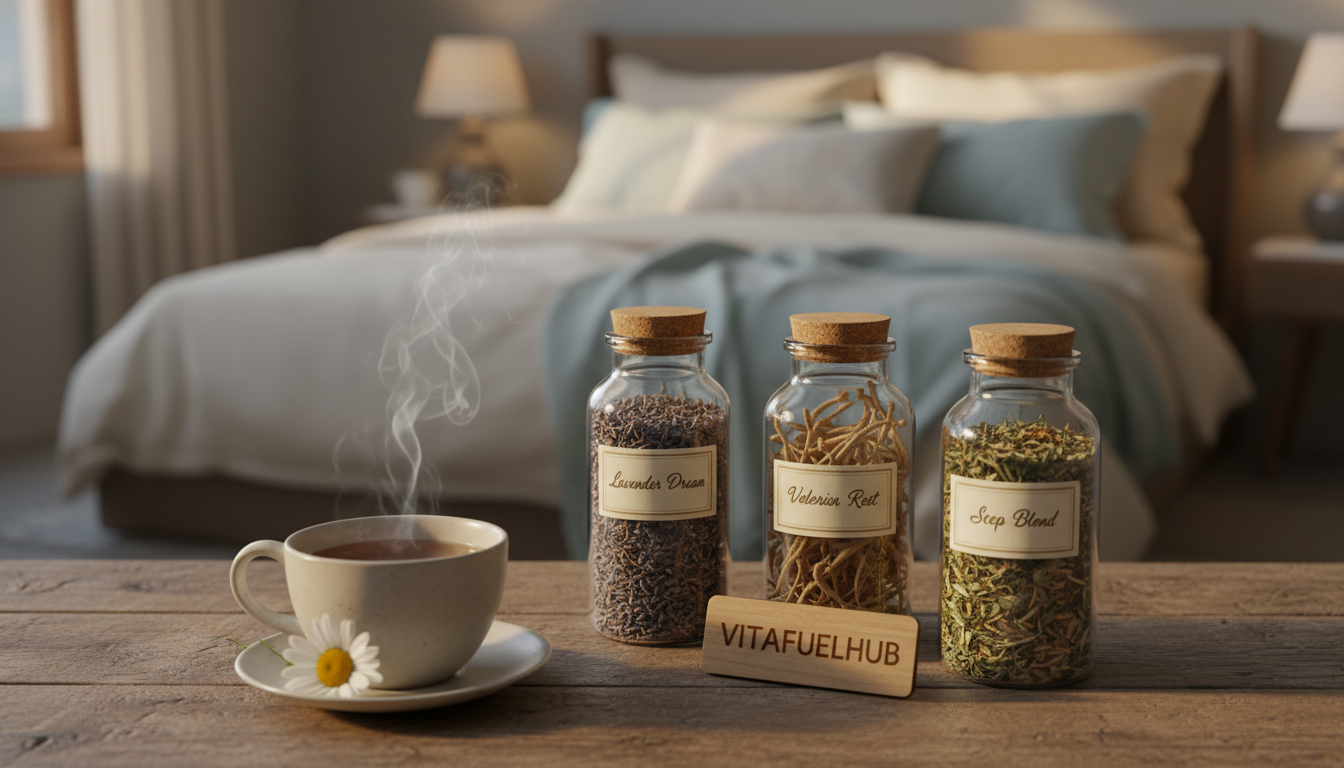

One in three adults says they have trouble falling asleep at least once a week, yet a simple night ritual can change that.
Adding a warm cup to your bedtime routine can be a gentle way to signal rest. Many of these blends are caffeine-free and designed to ease both body and mind.
Whether you prefer floral or earthy notes, the right mix can help you unwind after a long day. Science is still exploring how these traditional drinks support the natural move into slumber, but users and experts often report better sleep and deeper relaxation when a consistent routine is kept.
In this guide, we’ll highlight top options, how to prepare them, and simple tips to build a calming pre-bed ritual that helps you drift off more easily.
Key Takeaways
- Adding a warm, caffeine-free cup to your nightly routine can help cue the brain for rest.
- Choose blends with calming notes—floral or earthy—to match your preference.
- Consistency matters: a steady bedtime ritual improves sleep quality over time.
- Many options are gentle and suitable for most adults seeking better relaxation.
- Small, simple changes tonight can lead to noticeably better sleep soon.
Understanding the Benefits of Herbal Teas for Sleep
Many people find that a nighttime brew helps shift the mind from day to rest and can help improve sleep when used regularly.
Used for centuries, herbal teas come from any edible plant and include seven key varieties shown to aid rest. Modern research supports their role as a holistic way to improve sleep quality and reduce mild insomnia.
One notable study of postpartum women found chamomile tea lowered daytime symptoms and eased feelings of depression. Other studies point to sedative properties in certain herbs that can meaningfully improve sleep compared with no intervention.
The ritual itself is important. Sipping a warm tea before bed is a simple way to lower stress and create a calming routine. It is also a practical option for people trying to cut caffeine and boost overall health.
- Made from plant parts: leaves, flowers, or roots.
- Can reduce stress and nighttime insomnia symptoms.
- Supported by research and user reports as a gentle way toward better rest.
How Herbal Teas Improve Sleep Quality
Simple plant compounds can nudge the nervous system toward calm, easing the path to rest. Many of these ingredients act directly in the brain to change signals that control when we fall asleep.
The Role of Neurotransmitters
The brain relies on chemicals like GABA to slow activity and allow deep rest. Some blends contain apigenin, which binds to benzodiazepine receptors and helps reduce arousal.
Passionflower and magnolia bark include compounds that target GABA receptors. By acting on those pathways, these plants can improve sleep quality and shorten the time it takes to drift off.
Managing Nighttime Anxiety
Nighttime anxiety often keeps people awake. Drinking a warm cup at bedtime offers calming effects that soothe the nervous system and lower racing thoughts.
“The ritual itself helps many people disconnect from daily stress and prepares the body for rest.”
- Targets brain receptors to reduce anxiety and insomnia symptoms.
- Provides gentle effects that support overall health and better night routines.
Valerian Root for Deep Relaxation
For those who struggle to switch off, valerian root offers a concentrated plant-based option to encourage rest. Its compounds act directly on the nervous system to help people relax before bed.
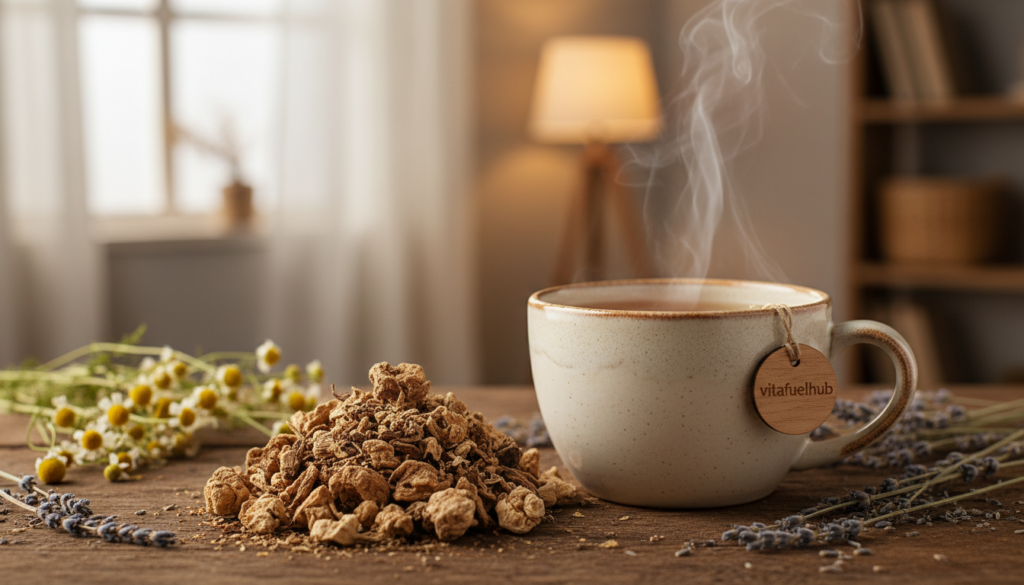
Valerian root contains valepotriates and sesquiterpenes—two natural sedatives shown to shorten the time it takes to fall asleep and to support deeper sleeping.
One study found that nearly 90% of people reported improvements after drinking valerian tea. Research suggests this root can improve sleep quality without many side effects linked to prescription sleeping pills.
- Long history treating insomnia, nervousness, and some palpitations.
- Effective sedative compounds that help people fall and stay asleep longer.
- Earthy taste can be softened with honey or maple syrup.
“Valerian root is effective for deep relaxation, helping to reduce the stress that often keeps us awake at night.”
| Benefit | Evidence | Notes |
|---|---|---|
| Faster sleep onset | Study: ~90% improvement reported | May be best used regularly for several nights |
| Improved sleep quality | Clinical research on valerian extract | Fewer common medication side effects |
| Relaxation, reduced stress | Traditional use and modern studies | Monitor individual reactions; start with a low dose |
Safety note: Because valerian is potent, watch how your body reacts and avoid mixing with sedatives or alcohol. If you have health concerns or take medications, consult a healthcare professional.
If you want to explore gentle treatments for common nighttime issues, consider this related resource on natural approaches: natural treatments and routines.
Chamomile Tea for Calming the Mind
A gentle cup of chamomile can quiet a busy mind and make bedtime feel easier.
Chamomile is known for its delicate floral flavor and mild calming effect. Many people sip a cup to reduce evening tension and manage mild anxiety before bed.
Active Compounds in Chamomile
The plant contains apigenin, a compound that binds to benzodiazepine receptors in the brain. This interaction creates a gentle tranquilizing effect that can ease the body into rest.
- Research shows chamomile can improve sleep quality in older adults.
- A study of postpartum women found reduced sleep symptoms and less depression after regular use.
- While not a cure for severe insomnia, a cup of chamomile often helps people unwind at night.
“Consistent use of chamomile can be a helpful addition to your bedtime routine.”
| Benefit | Evidence | Notes |
|---|---|---|
| Calms the mind | Apigenin receptor activity | Gentle effect; suitable for many adults |
| Improves sleep quality | Clinical studies in older adults | May take regular use to notice changes |
| Reduces mild anxiety | Postpartum study results | Safe when used alone; check interactions if on meds |
Lavender and Lemon Balm for Stress Relief
A small cup of lavender and lemon balm can turn a tense evening into something much calmer.
Lavender has been used since the Roman Empire to ease the mind. It is common in aromatherapy, but drinking a lavender tea can offer similar soothing effects.
Lemon balm (Melissa officinalis) belongs to the mint family. It has a long history as an antiviral and a gentle aid for restless nights.
- Reduced wakings: research suggests lavender can lower nighttime interruptions and boost mood.
- Improved quality: a study showed 500 mg of lemon balm led to better quality of life scores.
- Stress relief: a cup before bed eases symptoms of anxiety and helps manage fatigue and mild depression.
Tip: Add these plants to your bedtime routine one at a time to see how they affect you. Consult a clinician if you take medications or have health concerns.
Passionflower and Magnolia Bark Benefits
Two plants stand out for calming the nervous system and easing the transition to rest: passionflower and magnolia bark.
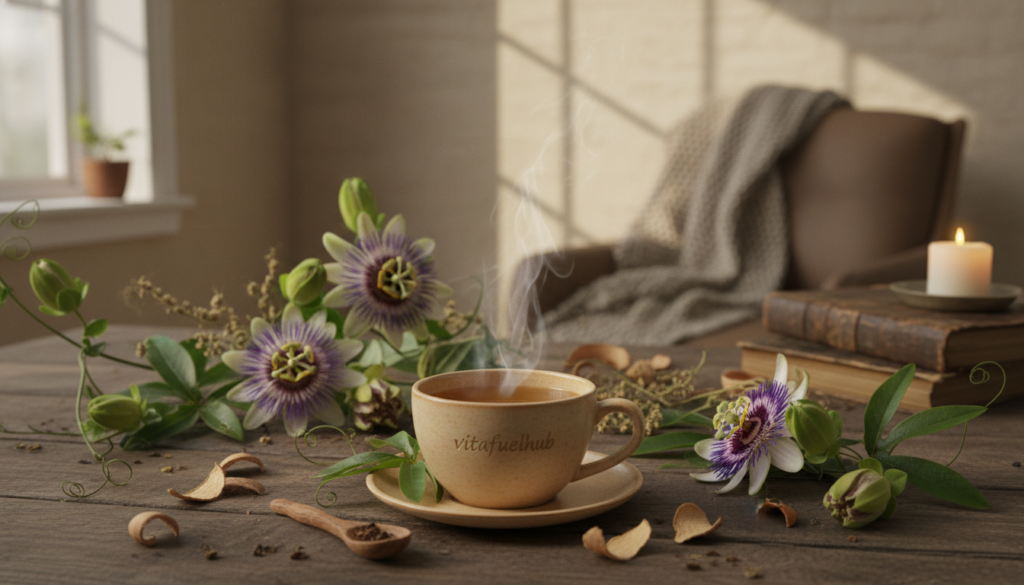
How Passionflower Affects GABA Receptors
Passionflower contains flavonoids that bind to the same receptors targeted by benzodiazepines. This interaction supports GABA activity in the brain.
The result can be lower anxiety and a shorter time to fall asleep. Studies suggest passionflower may help people fall asleep faster, especially when used with valerian root.
Traditional Uses of Magnolia Bark
Magnolia bark has a long history in traditional Chinese medicine. Its active compound, honokiol, also binds to GABA receptors.
Research found magnolia tea improved sleep quality and reduced symptoms of depression in a study of women who recently gave birth. Start with a small amount to test how your body responds.
- Natural sedative: passionflower reduces anxiety and promotes relaxation.
- Faster sleep onset: magnolia’s honokiol shortens the time to fall asleep.
- Combined use: mixing these plants with valerian root can boost effects, but proceed cautiously.
“Drinking a cup of these plants can help manage stress and improve overall sleep health.”
| Herb | Key Compound | Main Effect |
|---|---|---|
| Passionflower | Flavonoids (bind benzodiazepine sites) | Reduces anxiety; aids falling asleep |
| Magnolia bark | Honokiol | Promotes GABA activity; improves sleep quality |
| Combination | Passionflower + magnolia (+ valerian root) | Stronger sedative effect; use small doses first |
Incorporating Tea into Your Nighttime Routine
A warm cup and a few minutes of calm can become a powerful cue that bedtime has arrived. Make the drink part of a short, predictable routine to help your body prepare for rest.
The ritual of sipping a soothing beverage helps many people disconnect from the stress of the day. The aroma and warmth ease tension and lower anxiety before you lie down.
Tip: Enjoy your cup at least two hours before bed to reduce nighttime wakings. If you need a later drink, choose a small, caffeine-free option so it won’t disturb rest.
Consistency matters. A steady bedtime routine that includes a relaxing drink can improve overall sleep quality and mood over time. Pair it with dim lights and limited screen use for best results.
“Making a simple nightly habit signals your brain that it’s time to unwind.”
- Use a calming cup as a cue to stop work and start winding down.
- Keep the ritual short — five to fifteen minutes is enough.
- Combine the drink with other habits like reading or gentle stretching.
Important Safety Considerations and Side Effects
Before adding a new nightly cup, learn the risks and how to protect your health. Most people tolerate these plant drinks well, but some report headaches, dizziness, or skin reactions after use.
Keep fluids low at least two hours before bedtime to reduce nocturia and interrupted rest. Watch for signs of unusual fatigue, rash, or persistent headache after a cup.
When to Consult a Healthcare Professional
If you are pregnant, nursing, or taking prescription medications, talk with your doctor before trying valerian root, passionflower, or any new supplement. Research shows some plants can interact with drugs that affect GABA and other brain pathways.
| Issue | Possible Cause | Action |
|---|---|---|
| Headache or dizziness | Individual reaction to a plant or dose | Stop use; consult physician if persistent |
| Medication interaction | Valerian root or passionflower + sedatives | Check with prescriber before use |
| Nighttime urination | Drinking late | Limit fluids 2 hours before bed |
If you notice worrying symptoms, discontinue the cup and seek medical advice. Safety is the top priority when managing insomnia and improving sleep quality with natural options.
“Always err on the side of caution and ask a clinician when in doubt.”
Conclusion
Small, consistent choices at night often lead to better rest and brighter mornings. With a steady routine, you can cue your body to relax and improve sleep quality.
Chamomile and lavender are easy ways to add gentle support to your bedtime ritual. They help with relaxation and can improve sleep when used along with good habits.
Remember that these drinks are one tool among many for better health. Check with a clinician if you have concerns, listen to your body, and enjoy a calming cup as part of a nightly routine that brings real benefits.